Adjustment of status Brockton: Timeline, Requirements, and Tips
November 27, 2026
Adjustment of status in Brockton allows eligible immigrants to become permanent residents without leaving Massachusetts. The process involves specific timelines, documentation requirements, and procedural steps that can feel overwhelming without proper guidance.
We at Law Offices of Jeffrey A. Thompson help clients navigate this complex immigration pathway. This guide breaks down everything you need to know to move forward successfully.
What Adjustment of Status Actually Means
Adjustment of Status lets you become a permanent resident while staying in the United States. Instead of traveling to a consulate in your home country, you file your green card application directly with USCIS while physically present in Massachusetts. This approach changes everything about your timeline and your ability to work during the process.
When you file for Adjustment of Status, you can request work authorization and advance parole within about 90 days. This means you don’t have to pause your career while waiting for approval. The entire process typically takes 12 to 18 months in Massachusetts, according to USCIS data-significantly faster than the alternative route of consular processing.
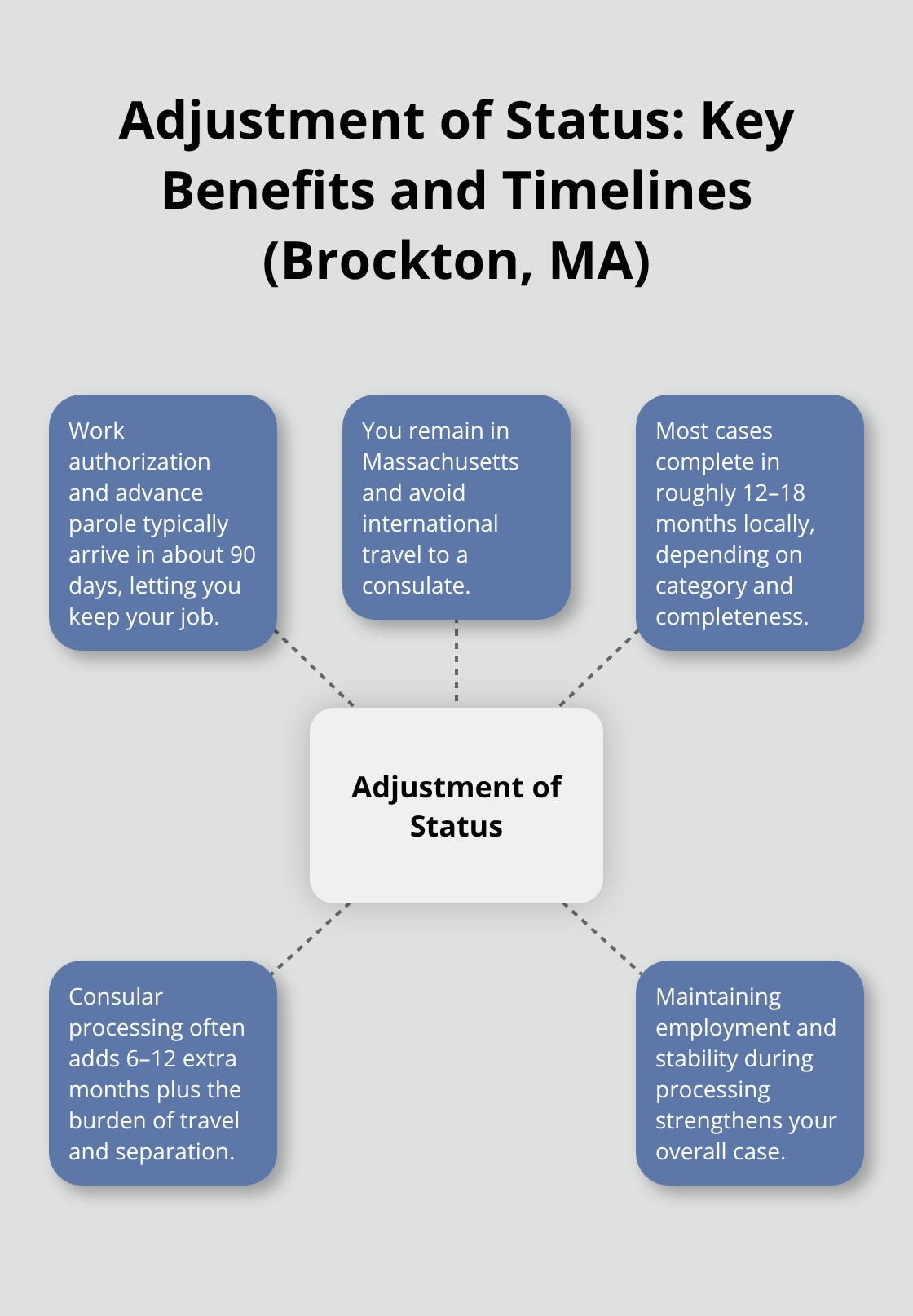
Consular processing requires you to leave the United States, go through the National Visa Center, attend an embassy interview in your home country, and then return. That approach adds 6 to 12 extra months to your timeline, plus the stress of leaving your job, family, and life behind temporarily.
Who Can File for Adjustment of Status
Immediate relatives of U.S. citizens have the fastest path forward. USCIS allows them to file for Adjustment of Status immediately without waiting for visa availability. Everyone else depends on the State Department’s Visa Bulletin, which determines when visa numbers become available for your category.
The key advantage of staying in the U.S. during this process is that you maintain employment continuity and avoid disruption to your life. If you’re eligible for concurrent filing-which means filing your immigrant petition and Adjustment of Status application at the same time-you can work while your case processes.
Why Staying in Brockton Matters
Staying in Brockton and maintaining your job during processing shortens the overall burden compared to consular processing, where you’d lose those months of income and stability. This matters most if you’re in a family-based category where your relative filed for you. Your employment history and financial stability during this period actually strengthen your case.
The next section covers the specific timeline you’ll face from the moment you submit your initial application through your final interview.
How Long Does Adjustment of Status Take in Brockton
Filing Your I-485 and Receiving Your Receipt Notice
USCIS marks the official start of your adjustment timeline when you submit your I-485 application. Within two weeks of receiving your complete package, USCIS sends you a receipt notice confirming they accepted your case. This receipt is your proof that your application is in the system and your timeline has begun.
Biometrics Appointments and Background Checks
Your biometrics appointment arrives within 4 to 8 weeks after USCIS accepts your application. The Boston Application Support Center and Lawrence Application Support Center handle fingerprinting and photos for Brockton residents, and USCIS data shows these appointments typically happen quickly when you respond promptly. If you cannot make your scheduled date, contact USCIS immediately to request a reschedule rather than ignoring the notice-missing this appointment creates unnecessary delays that extend your entire timeline.
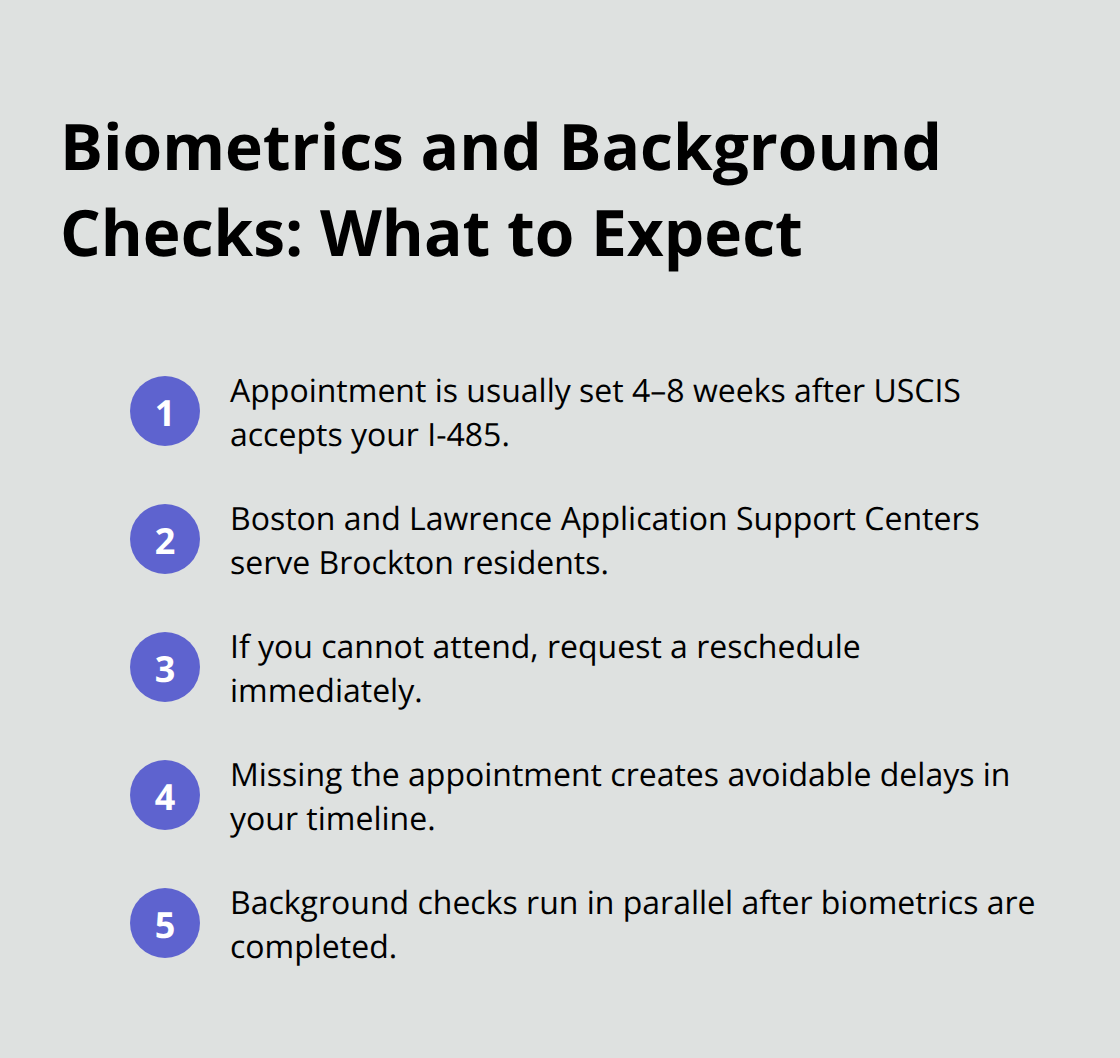
After you complete your biometrics, background checks run in parallel. USCIS flags any issues with your criminal history, immigration violations, or security concerns during this phase. If nothing problematic surfaces, your case moves toward the interview phase without additional complications.
Interview Notice and Preparation Timeline
Your interview notice arrives roughly 6 to 10 months after filing, though some cases move faster depending on your category and whether your application was complete. The interview itself typically lasts 20 to 45 minutes, and for family-based cases, officers ask detailed questions about how you met your sponsor, your finances together, and your living arrangements.
Bring original documents and copies of everything you submitted with your application to the interview-missing originals creates serious problems. USCIS makes one of three decisions after your interview: immediate approval (some cases are decided the same day), a Request for Evidence asking for missing documents or clarifications, or a follow-up interview.
Responding to Requests for Evidence
If you receive an RFE, respond within the roughly 12-month window USCIS provides. Submit only what they requested rather than flooding them with extra materials, and include a cover letter that addresses each item they asked for. This focused approach demonstrates you understand their concerns and can follow instructions precisely.
Overall Timeline and Employment Stability
The entire adjustment timeline typically runs 12 to 18 months from initial filing to green card in hand. Staying in Brockton and working during this period keeps your employment record intact and your financial situation stable-both factors that strengthen your case if questions arise during the interview. Your employment history and financial documentation during processing directly support your application, making this continuity far more valuable than the disruption consular processing would create.
The next section covers the specific documents and requirements USCIS demands in your I-485 package to avoid delays and RFEs before your interview even arrives.
What Documents USCIS Actually Requires
USCIS rejects incomplete I-485 packages immediately, which means a missing document or blank field sends your application back and costs you weeks or months. Fill every applicable field on Form I-485 completely-USCIS treats blank spaces as missing information, not as fields that don’t apply to you.
Consistency Across All Your Documents
Your legal name, date of birth, and address history must match exactly across your passport, birth certificate, marriage certificate, and all USCIS forms; inconsistencies trigger extra scrutiny and RFEs that delay your interview by months. Provide a full five-year address history with no gaps, and list every job you held during that period (including unemployment periods), with dates that align to your tax records and employment verification letters. Include current phone numbers and email addresses so USCIS can contact you directly rather than through mail, which slows communication.
Translations and Filing Fees
For any document not in English, attach certified translations that include the translator’s qualifications and a certification of accuracy; informal translations are rejected outright. Budget for certified translations as a mandatory expense, not an optional cost-cutting measure. Verify the current filing fees on USCIS before submitting payment, and submit the exact amount; incorrect fees trigger automatic rejection. If your income qualifies, file Form I-912 for a fee waiver with supporting documentation, though waivers are not automatic and require proof of financial hardship.
Medical Examination Cannot Be Delayed or Skipped
USCIS requires a medical examination on Form I-693 conducted by a USCIS-designated panel physician, and no substitutes or delays are acceptable. Schedule this exam well before filing if possible, and have the panel physician upload results electronically to USCIS rather than including printed copies in your package. Bring immunization records to your appointment, as the physician will assess your vaccination status and may recommend updates. Coordinate the timing of your medical exam and biometrics appointment so both are completed before your interview notice arrives, which prevents scheduling conflicts that extend your timeline.
Sponsor Financial Documentation Requires Specific Evidence
Your sponsor must complete Form I-864 Affidavit of Support, which guarantees they will support you financially and prevents you from becoming a public charge. The sponsor must provide employment verification letters showing current job title and salary, recent pay stubs covering the last three months, and tax returns for the past two years. If the sponsor’s income alone doesn’t meet the poverty line threshold set by USCIS, you need a co-sponsor or additional household members whose income counts toward the requirement.
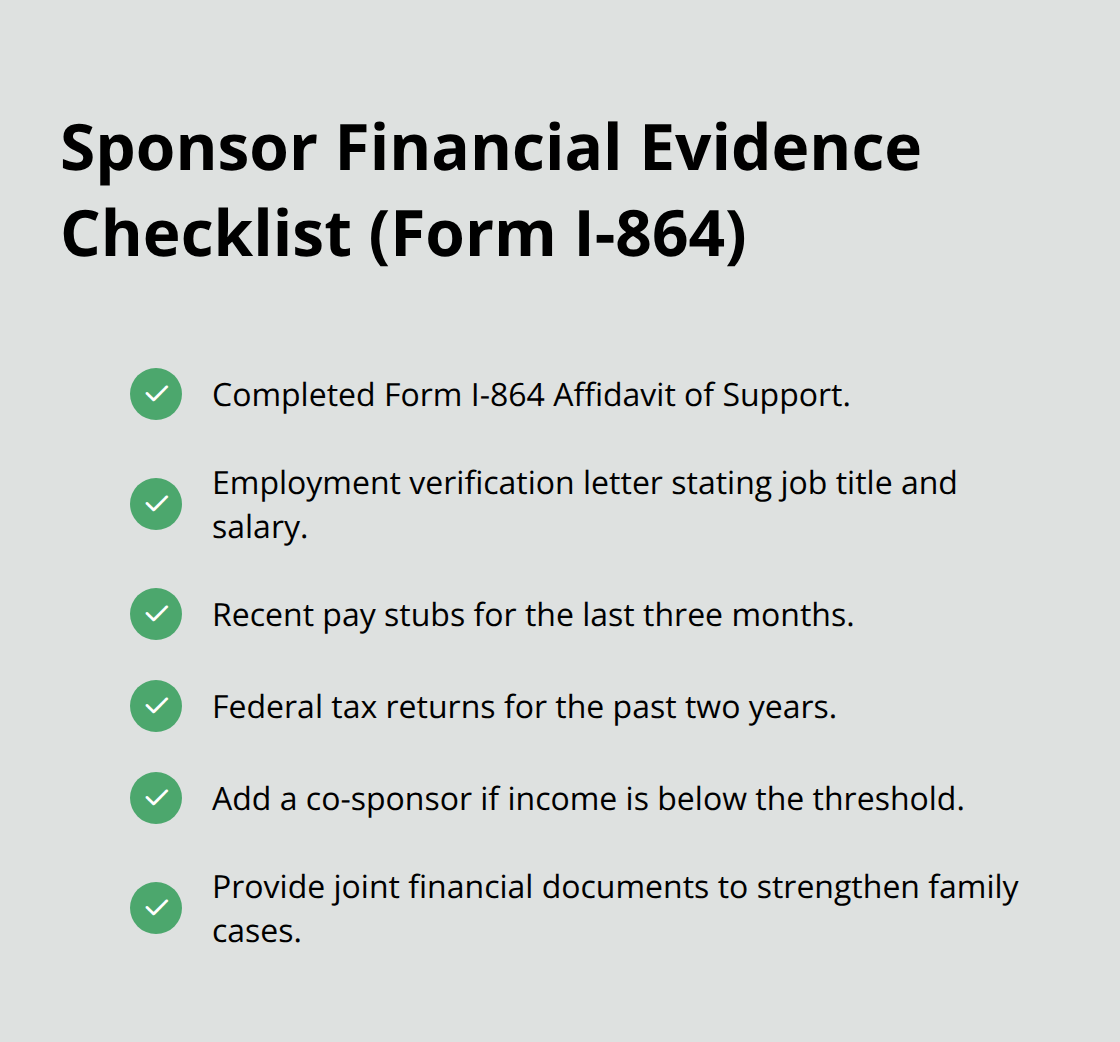
Joint financial documents like bank statements showing shared accounts, mortgage statements, and utility bills demonstrating shared residence strengthen your case for family-based adjustment, particularly for marriage-based applications.
Final Thoughts
Adjustment of Status in Brockton gives you a realistic path to permanent residency without abandoning your job, family, or stability. The 12 to 18-month timeline becomes manageable when you understand what USCIS expects and prepare your documents correctly from the start. Most delays stem from preventable mistakes: incomplete forms, inconsistent information across documents, missing translations, or slow responses to requests for evidence.
USCIS rejects incomplete I-485 packages immediately, which costs you weeks or months before you can resubmit. Your legal name, date of birth, and address history must match perfectly across every document, and your five-year employment history must align with tax records and verification letters. Your sponsor’s financial documentation also demands attention-Form I-864 requires current employment verification, recent pay stubs, and tax returns going back two years, and if income falls short, you need a co-sponsor or additional household members whose income counts toward the poverty line threshold.
Responding promptly to any Request for Evidence matters far more than most applicants realize. Submit your reply within 30 days rather than waiting until the deadline, organize materials logically, and include a cover letter addressing each item they requested. Contact Law Offices of Jeffrey A. Thompson to discuss your adjustment of status case and move forward with confidence toward your green card.
Share this post: