How to Navigate TPS and Adjustment of Status Process
January 16, 2026
Navigating immigration options can feel overwhelming, especially when you’re weighing TPS and adjustment of status as potential pathways forward. Both offer distinct advantages depending on your circumstances, but they work very differently.
At Law Offices of Jeffrey A. Thompson, we’ve guided countless clients through these processes. This guide breaks down what you need to know to move forward with confidence.
What TPS and Adjustment of Status Actually Do
Temporary Protected Status and adjustment of status serve fundamentally different purposes, and confusing them can derail your immigration strategy. TPS functions as a temporary shield, not a pathway to permanent residency. As of March 31, 2025, approximately 1.3 million people in the United States held TPS, yet most fail to recognize that renewal after renewal does not move them closer to a green card. TPS designations currently cover nationals from Burma, El Salvador, Ethiopia, Haiti, Lebanon, Somalia, South Sudan, Sudan, Syria, Ukraine, and Yemen, with extensions varying by country. Burma extends through January 24, 2026, while Ukraine extends through October 19, 2026. To qualify, you must be a national of a designated country, have continuously resided in the U.S. since a DHS-specified date, and lack certain criminal convictions or security bars.

TPS grants you protection from deportation and an Employment Authorization Document, meaning you can legally work, but it expires when the designation ends. Adjustment of status, by contrast, provides your mechanism to become a lawful permanent resident-a green card holder. This requires an approved immigrant petition (typically Form I-130 for family sponsorship or Form I-140 for employment) and a visa available in your category. The critical distinction: TPS offers temporary relief; adjustment offers permanent residency.
How Your Entry Method Controls Your Options
Your path forward depends entirely on how you entered the United States. If you entered without inspection, the 2021 Supreme Court ruling and subsequent federal court decisions severely restrict your ability to adjust status while remaining in the country. Most TPS holders who entered without inspection cannot file Form I-485 from within the United States. Instead, you must pursue consular processing, which means departing the U.S. and applying through a consulate abroad. This triggers potential re-entry bars lasting three or ten years unless you qualify for a waiver. If you entered legally on a valid visa, your path to adjustment becomes considerably clearer. This distinction means your entry method directly determines whether TPS serves as a stepping stone or simply provides temporary protection while you explore other options.
Why Early Planning Prevents Costly Mistakes
Many TPS holders do not realize the entry restriction until they are ready to adjust, making early planning essential. The practical reality: holding TPS for years without a secondary strategy leaves you vulnerable when the designation potentially expires or when you decide permanent residency matters. Understanding your specific circumstances now-rather than waiting until TPS ends-allows you to map a realistic path forward and avoid the shock of discovering you must leave the country to complete your adjustment.
What You Need to File and When
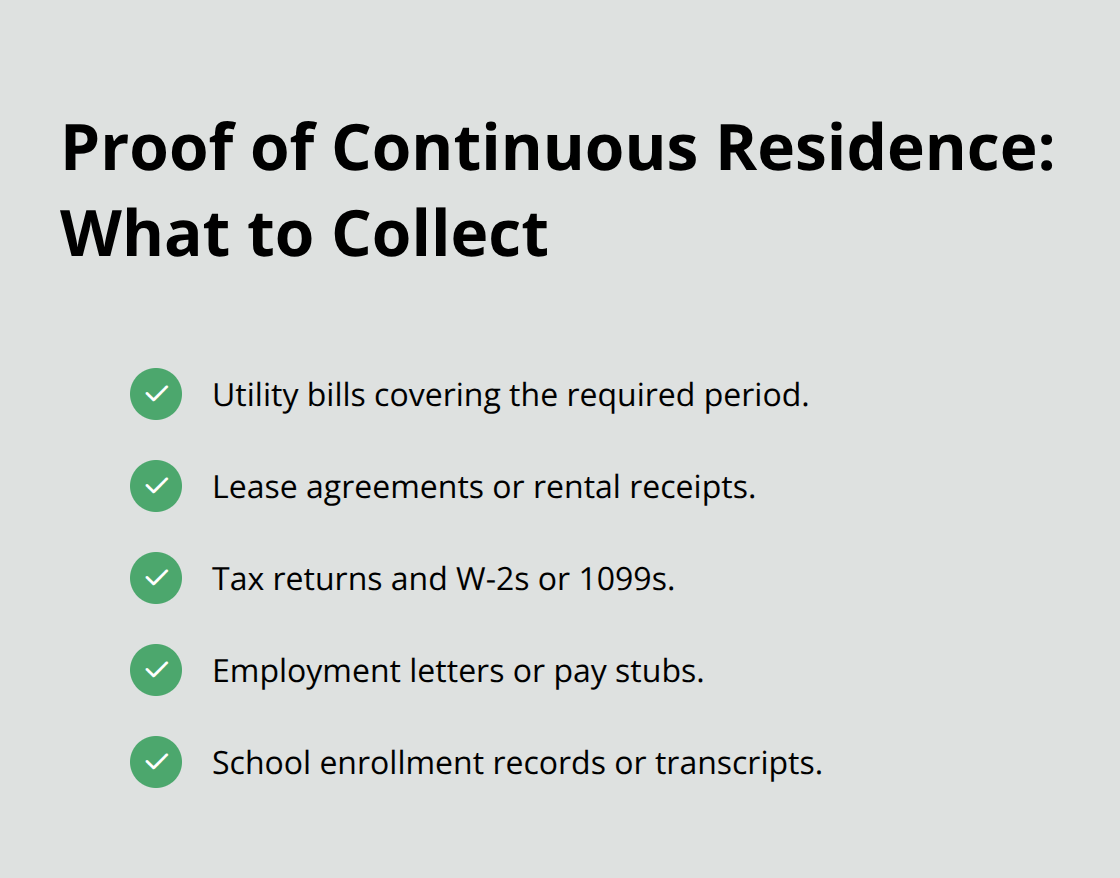
Applying for TPS or adjustment of status requires precision. A single missing document or incorrect date triggers a Request for Evidence (RFE) that delays your case by months, or worse, results in denial. Start by gathering identity documents-your passport, birth certificate, and national ID if available. For TPS applicants, you also need proof of continuous residence in the United States since the DHS-specified date for your country. This means collecting utility bills, lease agreements, tax returns, employment letters, or school enrollment records spanning the entire required period. USCIS scrutinizes these documents heavily because continuous residence is non-negotiable for TPS eligibility.
Documentation Requirements for Adjustment of Status
If you adjust status, your documentation package expands significantly. You need the original or certified copy of your birth certificate, passport, police clearances from every country where you lived more than six months, medical examination results from a USCIS-approved civil surgeon, and proof of financial support via Form I-864. The financial support requirement is strict-your sponsor’s household income must meet 125 percent of the federal poverty line, or 187 percent if your sponsor is military. Many applicants underestimate the complexity here and submit incomplete packets, forcing USCIS to issue RFEs.
Processing Timelines and What to Expect
Processing timelines vary dramatically by location and application type. TPS initial applications typically take four to six months, while adjustment of status cases range from eight months to over two years depending on your field office and visa category availability. Check the USCIS processing times tool for your specific location before filing-this informs your timeline expectations and helps you plan accordingly.
Completing Forms With Accuracy
Form I-821 for TPS and Form I-485 for adjustment of status demand absolute accuracy. Typos, omitted middle names, or inconsistent address information trigger RFEs or denials. Complete every field, even if it means writing N/A in sections that do not apply to you. Leave nothing blank. For adjustment of status, you must file Form I-485 Supplement A if you entered the United States without inspection and are relying on INA 245(i) protection-skipping this form jeopardizes your entire case. USCIS now allows online filing for both TPS applications and some adjustment cases, which can accelerate processing by weeks compared to mail submission. The online portal catches certain errors before submission, reducing RFE risk.
Fees and Receipt Numbers
Filing fees for TPS initial applications run approximately $50 for Form I-821, with Form I-765 for work authorization costing around $85 as of 2025. Adjustment of status requires Form I-485 filing fees of $640 plus biometric services fees of $85 for most applicants, though fee waivers via Form I-912 are available if your household income falls below 200 percent of the poverty line. After you submit your application, USCIS sends a receipt notice within one to two weeks. This receipt contains your case number-save it. You will use this number to check your case status online through the USCIS portal.
The Biometrics Appointment: Do Not Miss It
Biometrics appointments typically arrive within two to three months of filing. Missing your biometrics appointment or failing to sign the acknowledgment form stating your application information is complete and correct results in automatic denial. This happens more often than you might think, so calendar the appointment immediately when the notice arrives. Once USCIS schedules your biometrics, the next phase of your case begins-and your preparation for what comes next determines whether you move forward smoothly or face unexpected obstacles.
Common Mistakes That Derail TPS and Adjustment Applications
Form Errors Trigger Costly Delays
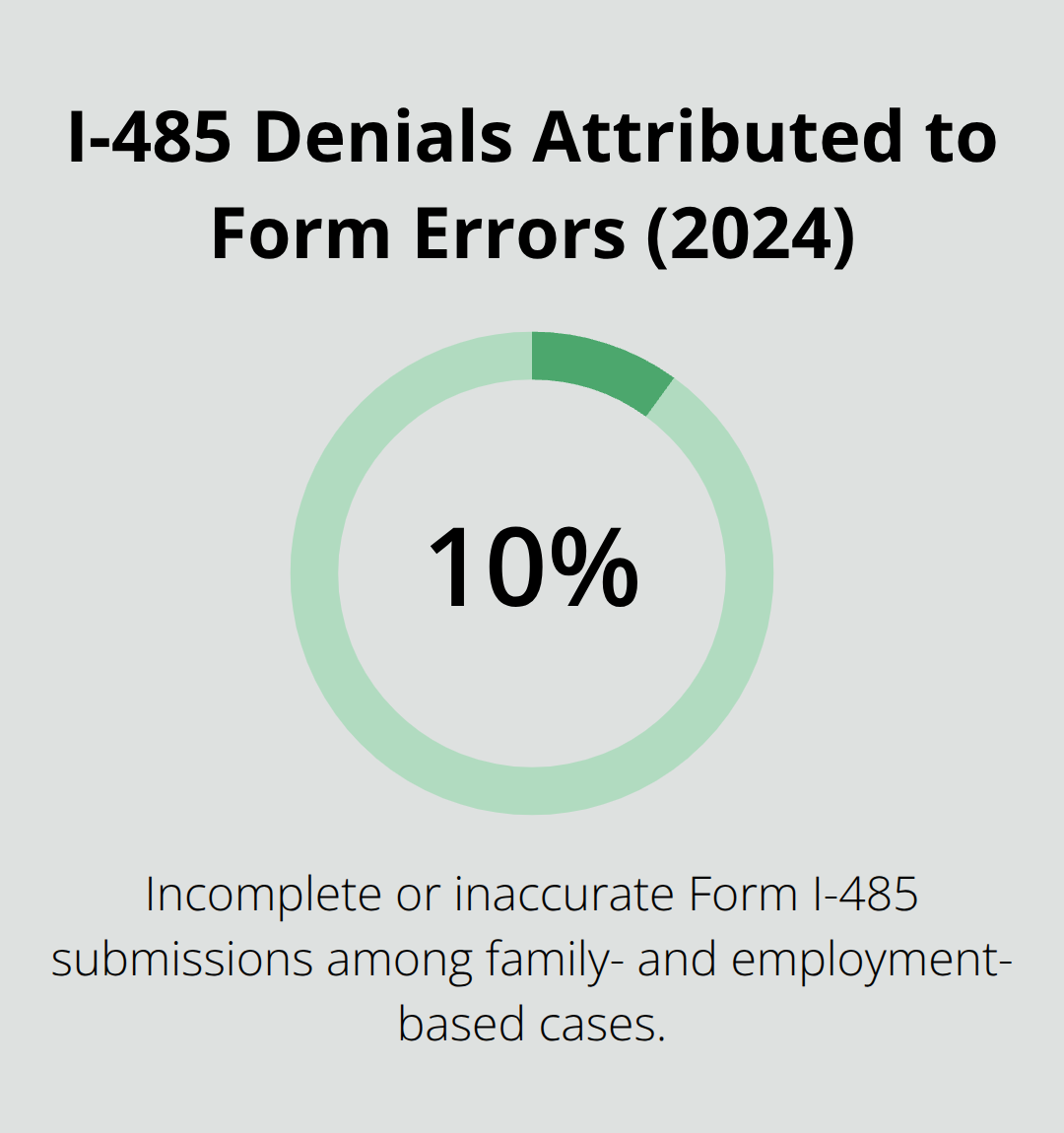
Form errors destroy more applications than anything else. USCIS reported in 2024 that incomplete or inaccurate Form I-485 submissions account for roughly 10 percent of denials across family-based and employment-based applications. The problem is not complexity-it is carelessness.
Applicants skip fields marked optional, mistype dates, provide inconsistent addresses across forms, or omit middle names entirely. USCIS cross-references your application against passport records, birth certificates, and immigration databases. A single discrepancy between your Form I-485 and your passport regarding spelling or date of birth triggers an RFE that delays your case by three to six months.
For TPS applicants, Form I-821 errors prove equally costly. Many filers misunderstand the continuous residence requirement and provide documentation gaps, only to receive an RFE asking for additional proof spanning months or years. The solution is ruthless accuracy. Complete every single field. Write N/A where sections do not apply rather than leaving blanks. Have someone else review your forms before submission-you miss your own mistakes.
If you entered without inspection and file for adjustment, Form I-485 Supplement A is mandatory if you qualify under INA 245(i). Omitting this form results in automatic denial, not just an RFE. Online filing through the USCIS portal catches certain formatting errors before you submit, reducing this risk significantly compared to paper applications.
Missing Your Biometrics Appointment Ends Your Case
Your biometrics notice arrives with a specific date and location. Missing that appointment or arriving late results in denial without appeal opportunity. USCIS does not reschedule missed appointments automatically-you must request one, and requests are often denied. Between 2023 and 2024, USCIS data showed that TPS applicants missed their biometrics appointments, resulting in case terminations.
The notice arrives in the mail, sometimes weeks before the appointment. Many applicants discard it thinking it is junk mail or forget the date entirely. Calendar the appointment the day you receive the notice. Set phone reminders one week before and the day before. Bring your receipt notice and valid ID to the Application Support Center. You must sign an acknowledgment form stating your application information is complete and correct-this signature is legally binding. Failure to sign it counts as failure to appear and triggers denial.
If you face a genuine emergency preventing attendance, contact USCIS immediately at the number on your notice before your appointment date. Rescheduling requests submitted after your missed appointment are rarely approved. For TPS filers, biometrics typically occur within two to three months of filing. For adjustment cases, timing varies by location but generally follows within three to four months.
Interview Preparation Determines Your Outcome
If USCIS schedules an interview for your TPS or adjustment case, your preparation determines the result. The interview notice specifies which documents to bring-bring originals, not copies. Many applicants bring only the copies they submitted with their application, then discover USCIS wants to examine originals. Bring your passport, travel documents, I-94 arrival record, birth certificate, police clearances, medical examination results, and financial support documentation.
USCIS officers compare documents against your written application to verify consistency. Contradictions between what you wrote and what you say in person raise red flags. For example, if your I-485 states you have been continuously employed since 2015 but your interview testimony contradicts this, the officer documents the discrepancy and may recommend denial.
Practice your answers beforehand. Know your family history, employment dates, addresses, and reasons for seeking adjustment or TPS. Speak clearly and answer only what is asked-do not volunteer extra information. If you do not understand a question, ask the officer to repeat it rather than guessing. If you do not know an answer, say so honestly rather than inventing one. USCIS interviews for adjustment cases increasingly focus on whether you meet financial support thresholds and whether your immigrant petition was properly approved. For TPS interviews, officers verify continuous residence and absence of disqualifying criminal convictions.
Final Thoughts
TPS and adjustment of status represent two fundamentally different immigration strategies, and your circumstances, entry method, and long-term goals determine which path fits your situation. TPS provides temporary protection and work authorization when your home country faces dangerous conditions, but renewal after renewal does not move you toward permanent residency. Adjustment of status becomes your mechanism to obtain a green card if you have an approved immigrant petition and meet all eligibility requirements. Your entry method controls whether you can adjust within the United States or must pursue consular processing abroad, a distinction that carries serious consequences including potential re-entry bars lasting years.
These processes demand precision from start to finish, and form errors, missed biometrics appointments, incomplete documentation, and poor interview preparation destroy cases regularly. You must complete every field on your application with absolute accuracy, gather all required documents before filing, and treat your biometrics appointment as non-negotiable. If you hold TPS, evaluate whether a family member or employer can sponsor you for permanent residency through an immigrant petition. If you entered legally on a valid visa, adjustment of status becomes realistic. If you entered without inspection, consular processing may be necessary, requiring careful planning to minimize re-entry bar exposure.
We at Law Offices of Jeffrey A. Thompson understand that navigating the TPS and adjustment of status process creates stress and uncertainty. Contact Law Offices of Jeffrey A. Thompson to discuss your options with an experienced immigration attorney who knows these processes inside and out.
Share this post: