Petition for relatives Massachusetts: Filing Tips and Deadlines
May 22, 2026
Petitioning for relatives in Massachusetts involves specific rules, forms, and deadlines that trip up many applicants. Missing even one requirement can delay your case by months or trigger a denial.
We at Law Offices of Jeffrey A. Thompson help families navigate this process correctly the first time. This guide walks you through what you need to know.
How Petitions for Relatives Work in Massachusetts
The I-130 Petition: Starting Your Family Immigration Case
A petition for relatives is the legal mechanism that starts the family-based immigration process. When you file Form I-130 with USCIS, you ask the government to recognize that you have a qualifying family relationship with someone outside the United States or someone adjusting status inside the country. This petition must receive approval before your relative can move forward with visa processing or adjustment of status. The petitioner (you) must be either a U.S. citizen or a lawful permanent resident, and your relative must fall into one of the defined family categories.
Immediate Relative vs. Family Preference Categories
Immediate Relative visas cover spouses, unmarried children under 21, and parents of U.S. citizens-and these have no annual cap. Family Preference visas apply to unmarried adult children, married children, and siblings of U.S. citizens, but these face annual limits that create backlogs lasting years or even decades. The Department of State Visa Bulletin shows current visa availability and priority date movement, so you can track where your case stands in the queue. Understanding which category fits your relative determines your entire timeline and strategy.
Processing Paths: Consular Processing vs. Adjustment of Status
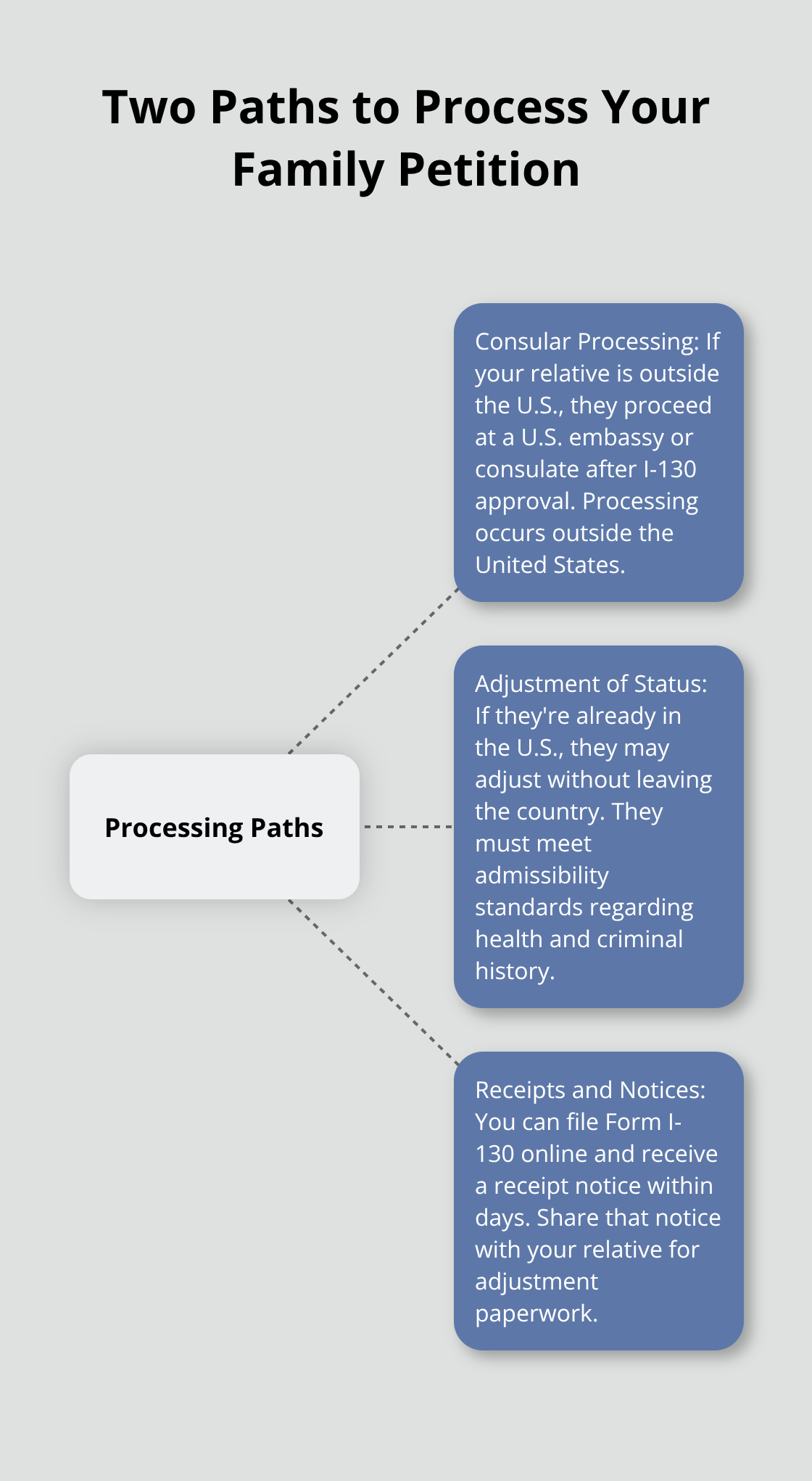
Spouses and unmarried children under 21 typically move faster than siblings or married children because Immediate Relative petitions bypass the visa cap. If your relative is outside the U.S., they proceed through consular processing at a U.S. embassy or consulate after I-130 approval. If they’re already in the U.S., they may adjust status without leaving the country, though they must meet admissibility standards regarding health and criminal history. Massachusetts residents can file Form I-130 online through USCIS, receiving a receipt notice in their account within days, then share that notice with their relative for inclusion in adjustment paperwork.
Timeline Expectations for Your Petition
Processing times for family petitions typically range from 10 months to several years depending on the relationship type and country of origin, according to USCIS guidance. The specific path your relative takes-whether consular processing or adjustment of status-affects how long each stage takes. Knowing these timelines helps you plan financially and logistically for what lies ahead. The next section covers the specific forms and documents you’ll need to gather to move your petition forward.
What Documents You Need to File
Core Forms and Proof of Relationship
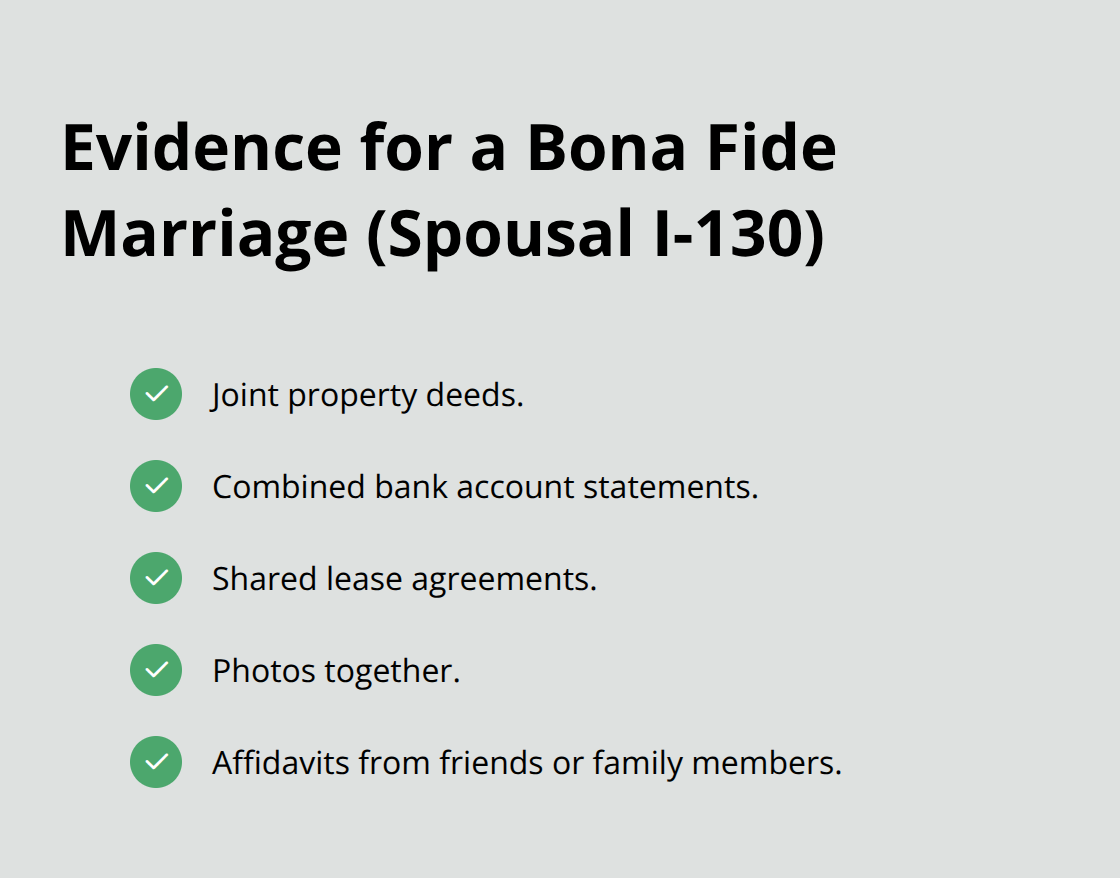
Form I-130 starts the process, but it represents only the first step. You must submit proof of your citizenship or permanent residency alongside certified copies of birth certificates, marriage certificates, or adoption decrees that match your relationship type. USCIS rejects cases regularly when applicants submit incomplete paperwork or fail to prove the relationship clearly. For spousal petitions, the government wants joint property deeds, combined bank account statements, shared lease agreements, photos together, and affidavits from friends or family members who can confirm the marriage is real. Multiple types of evidence matter because applicants have fabricated relationships to circumvent immigration law. One document alone will not satisfy USCIS requirements.
Financial Documentation and the I-864 Affidavit
Your relative’s financial stability matters enormously if you petition as a permanent resident rather than a U.S. citizen. You must complete Form I-864, the Affidavit of Support, which legally obligates you to support your relative and prevents them from becoming a public charge. USCIS examines your tax returns for the last three years, W-2 forms, and current pay stubs to verify your income meets 125 percent of the federal poverty line for your household size. If your income falls short, you can add a joint sponsor, though this complicates the process significantly. This financial documentation carries as much weight as proof of relationship.
PDF Requirements and Filing Fees
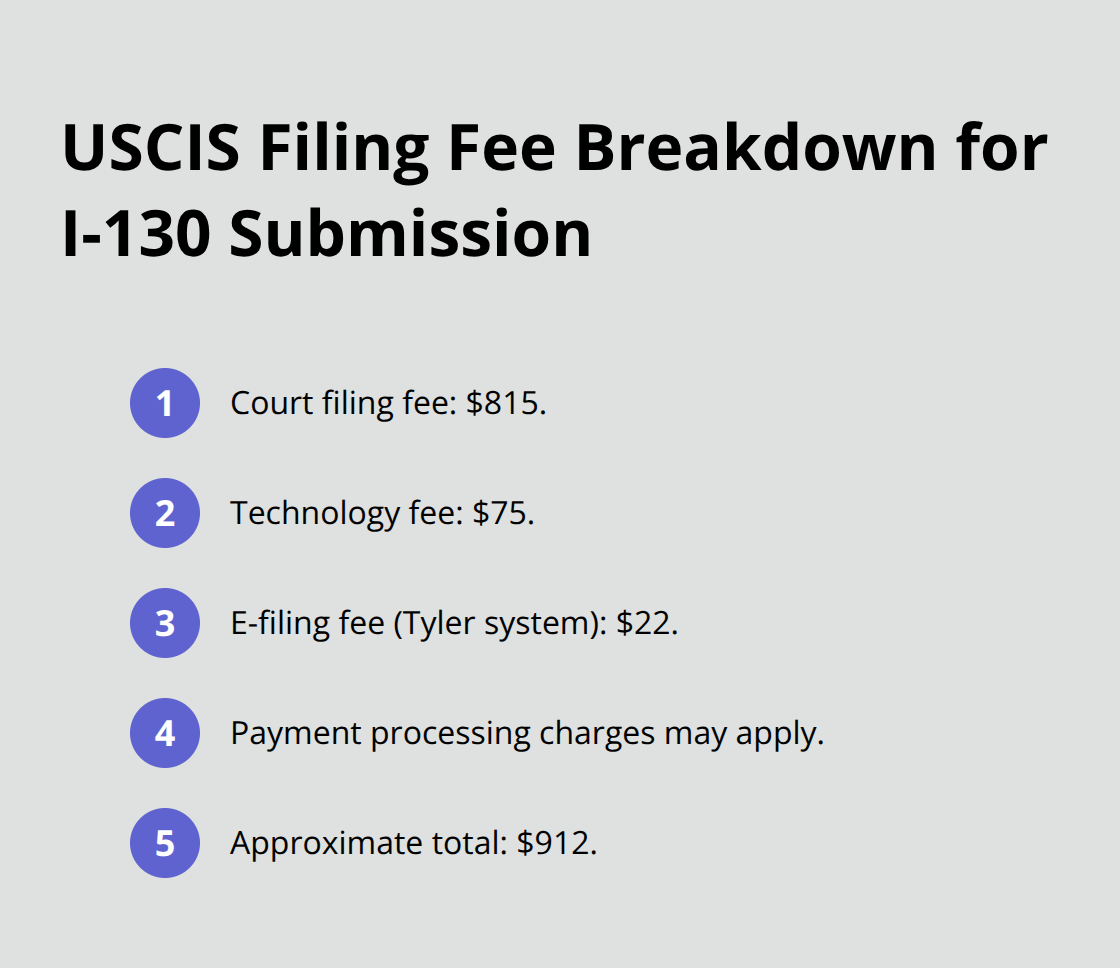
Upload all documents as PDFs in portrait orientation without active hyperlinks or password protection, and follow USCIS naming conventions precisely. The filing fee totals approximately $912 according to USCIS guidance, including the $815 court filing fee, $75 technology fee, and $22 e-filing fee through the Tyler system, plus any payment processing charges. These fees are nonrefundable regardless of outcome, so submitting a complete petition from day one saves money and months of waiting.
Massachusetts residents filing online through USCIS receive confirmation within days, but that confirmation means nothing if your supporting documents are weak or missing.
How Missing Documents Delay Your Case
Processing times range from 10 months to several years depending on visa category and country of origin according to USCIS data. Missing documents trigger Requests for Evidence that add delays to your timeline. An incomplete petition forces USCIS to contact you, request the missing items, wait for your response, and then restart their review. Each RFE represents a significant delay that you can prevent through thorough preparation. Organize documents in a spreadsheet, check them against the official USCIS checklist twice, and have someone else review your packet before submission to catch errors you might miss. This preparation phase determines whether your case moves forward smoothly or stalls for months.
What Comes Next in Your Filing Journey
Once you understand what documents USCIS requires and how to format them correctly, you face another critical challenge: avoiding the common mistakes that derail petitions even after you submit complete paperwork. The next section covers the errors that applicants make repeatedly and how you can sidestep them entirely.
Three Mistakes That Stall Family Petitions
Documentation Errors That Trigger Rejections
Documentation errors are the primary reason USCIS denies or delays family petitions, and these errors are entirely preventable. The most common problem involves birth certificates, marriage certificates, or adoption documents that lack official seals, notarization, or certified translations when required. USCIS rejects photocopies without certification stamps and will not accept documents in languages other than English unless accompanied by certified translations prepared by qualified translators. A second frequent error involves PDFs that violate USCIS formatting rules: documents with active hyperlinks, password protection, landscape orientation, or incorrect naming conventions trigger automatic rejection. Third, applicants routinely fail to include sufficient evidence of bona fide relationships in spousal petitions, submitting only a marriage certificate when USCIS requires joint property deeds, combined bank statements, shared lease agreements, photographs spanning years, and affidavits from friends or family members.
One applicant submitted a single marriage license and received a Request for Evidence that demanded proof of cohabitation, shared finances, and joint decision-making spanning at least two years. The delay cost six months of processing time that preparation could have prevented. Your safest approach involves creating a master checklist against official USCIS requirements, obtaining certified copies of all vital records directly from government agencies, and having a qualified translator prepare certified translations for any foreign-language documents. Convert everything to PDFs using portrait orientation without hyperlinks or protection. Print your packet and review it twice, then have someone unrelated to your case review it a third time to catch formatting errors you might miss.
Missed Deadlines and Slow Responses
Processing delays multiply when applicants miss deadlines or fail to respond promptly to USCIS requests. When USCIS issues a Request for Evidence, you typically have 84 days to respond, though USCIS may grant extensions in limited circumstances. Responding late or incompletely restarts the review clock and extends your timeline by months. Each delayed response represents significant additional waiting that you can prevent through careful calendar management and prompt action.
Set reminders well in advance of any USCIS deadline and respond to requests with complete documentation rather than partial submissions. Track all submission confirmations and receipt numbers to monitor progress and address questions quickly. This proactive approach keeps your case moving forward instead of stalling in the USCIS queue.
Income Requirements and Joint Sponsor Complications
Income requirements under Form I-864 represent another critical failure point: your household income must reach 125 percent of the federal poverty line for your household size according to USCIS guidelines, and this calculation changes annually. If you fall short, adding a joint sponsor creates additional complexity because that sponsor must also meet income thresholds and sign binding legal documents. Many applicants discover income shortfalls only after filing, forcing them to secure a co-sponsor or withdraw their petition entirely.
Calculate your household income against current poverty guidelines before filing and account for all household members. Confirm you meet the 125 percent threshold with documentation from tax returns, W-2 forms, and current pay stubs. If you anticipate falling short, identify a potential joint sponsor in advance and discuss their willingness to participate before submitting your petition. This advance planning prevents costly delays and eliminates the need to restart your application after submission.
Final Thoughts
Petitioning for relatives in Massachusetts requires you to master three critical areas: complete documentation, timely responses, and accurate financial calculations. A single missing document or formatting error stalls your case for months, and delayed responses to USCIS requests extend your timeline significantly. We at Law Offices of Jeffrey A. Thompson have seen applicants lose months of progress because they attempted this process alone and overlooked a requirement they didn’t know existed.
Attorney Thompson assists clients in navigating the entire petition for relatives Massachusetts process, from paperwork preparation to overcoming legal hurdles that arise during review. Whether you face income requirement challenges, need help gathering evidence of your relationship, or must respond to a Request for Evidence, experienced legal representation prevents costly mistakes and keeps your case moving forward. Many applicants discover too late that a single formatting error or missing document has derailed their petition.
Your next step is straightforward: gather your vital records, calculate your household income against current poverty guidelines, and identify all documents USCIS requires for your specific relationship category. If you feel uncertain about any requirement or want professional review of your packet before submission, contact Law Offices of Jeffrey A. Thompson in Brockton, Massachusetts.
Share this post: