How to Apply for Military Parole in Place Adjustment of Status
March 23, 2026
Military service members and their families often face complex immigration decisions. At Law Offices of Jeffrey A. Thompson, we help eligible service members understand military parole in place adjustment of status and navigate the application process.
This guide walks you through eligibility requirements, documentation steps, and the benefits available to you.
Who Qualifies for Military Parole in Place
Service Member Sponsorship Requirements
To qualify for military parole in place, you must be a family member of someone with active military service, Selected Reserve membership, or honorable military service history. The service member themselves cannot apply for parole in place, but their eligible relatives can. Active-duty members, Selected Reserve personnel, and veterans who were not dishonorably discharged all qualify as sponsors. If you served in the Army, Navy, Air Force, Marine Corps, Coast Guard, or National Guard and received an honorable discharge, your family members can pursue this option. A dishonorable discharge disqualifies you from sponsoring anyone, so verify your discharge status through your DD Form 214 before proceeding. The military branch does not matter-what matters is that you completed service without a dishonorable discharge.
Eligible Family Relationships
Your relationship to the service member determines your eligibility as a family member. Spouses, children, parents, and unmarried sons or daughters all qualify. For grandchildren, they must be unmarried and under 21 years old. If you are a widow or widower of a service member, you also qualify. Parents of active-duty service members can file for parole in place, not just spouses and children-a pathway many families overlook.
Processing Speed and Timeline
There is no requirement that you have been in the United States for a specific length of time, no visa lottery involvement, and no waiting list. USCIS processes parole in place applications with expedited handling according to their internal guidance. This speed matters because your work authorization and protection from deportation depend on approval.
Demonstrating Eligibility Through Documentation
You cannot have a criminal record that would make you deportable, and you must demonstrate either urgent humanitarian reasons or significant public benefit. Urgent humanitarian reasons include medical conditions requiring treatment in the United States or family hardship caused by separation. Significant public benefit is harder to prove but can include economic contributions or community involvement. Gather documentation of military service, proof of your family relationship through birth certificates or marriage certificates, and evidence of your physical presence in the United States with utility bills, lease agreements, or bank statements. These documents form the foundation of your application and directly influence USCIS’s decision on your case.
What Documents You Need to File for Parole in Place
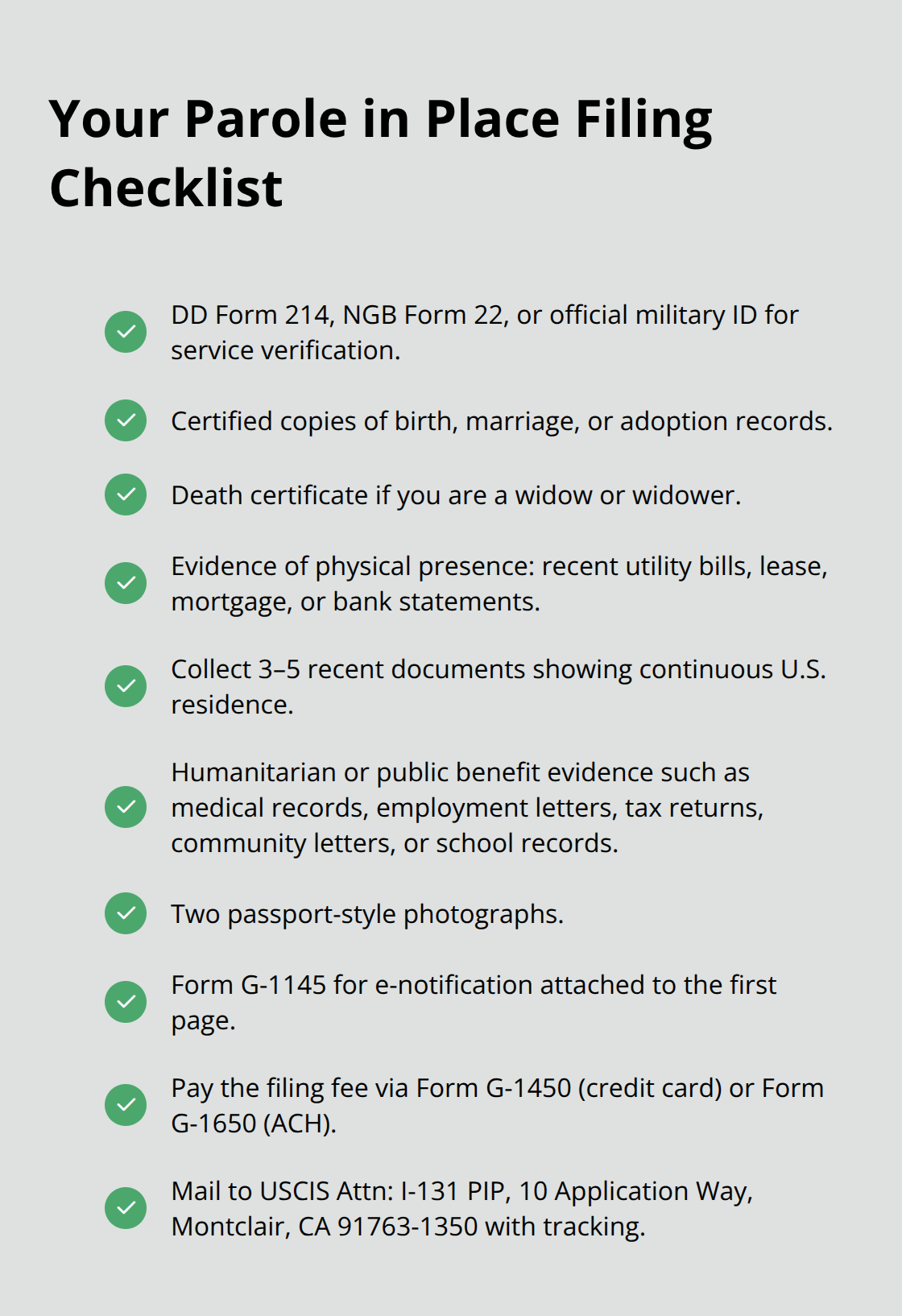
Gathering the right documents before filing makes the difference between approval and rejection. Start with military service verification. You need either a DD Form 214 (Certificate of Release or Discharge from Active Duty), an NGB Form 22 (for National Guard service), or official military identification that shows your service dates and discharge status. USCIS will not process your application without this documentation.
Proof of Family Relationship and Military Service
Next, prove your family relationship. Original birth certificates, marriage certificates, or adoption papers must accompany your application. USCIS requires certified copies from the issuing government agency, not photocopies. If you are a widow or widower, include the service member’s death certificate. These documents establish the legal connection between you and the service member who sponsors your parole in place request.
Evidence of Physical Presence in the United States
Physical presence documentation matters just as much as military records. Utility bills dated within the last two months, lease agreements, mortgage statements, or bank statements all work. Collect at least three to five pieces showing you have lived in the United States continuously. This evidence demonstrates that you actually reside in the country and have maintained a presence there.
Supporting Documentation for Humanitarian or Public Benefit Claims
Medical records help if you claim urgent humanitarian reasons. Hospital discharge summaries, doctor’s letters confirming ongoing treatment needs, or prescription documentation strengthen your case significantly. For significant public benefit claims, gather employment letters, tax returns from the past two years, letters from community organizations, or school enrollment records showing your contributions. Form I-131 itself is straightforward, but the supporting evidence determines whether USCIS approves or denies your request.
Submission Requirements and Processing Timeline
Mail your completed Form I-131 with all supporting documents to USCIS Attn: I-131 PIP, 10 Application Way, Montclair, CA 91763-1350. Use certified mail with tracking to confirm receipt. Include two passport-style photographs and Form G-1145 (E-Notification of Application/Petition Acceptance) attached to the first page so you receive email confirmation when USCIS opens your file. The filing fee appears on the USCIS Fee Schedule, and you must pay by credit card using Form G-1450 or through ACH with Form G-1650. Do not send cash or personal checks.
USCIS processes applications faster when the fee is correct and the address is accurate. After submission, expect a receipt notice (Form I-797C) within two to three weeks. This receipt contains your case number and serves as proof you filed. You will likely receive a biometrics appointment notice requiring you to visit a USCIS office for fingerprinting and a photograph. Attend this appointment or your case will be denied. Some applicants receive a Request for Evidence asking for additional documentation. Respond within the deadline stated on the notice, usually 84 days. Missing this deadline results in case denial.
Once USCIS approves your parole in place request, you gain work authorization and protection from deportation-but approval opens the door to your next major step: adjusting your status to become a lawful permanent resident.
What Parole in Place Actually Gives You
Work Authorization and Immediate Employment Rights
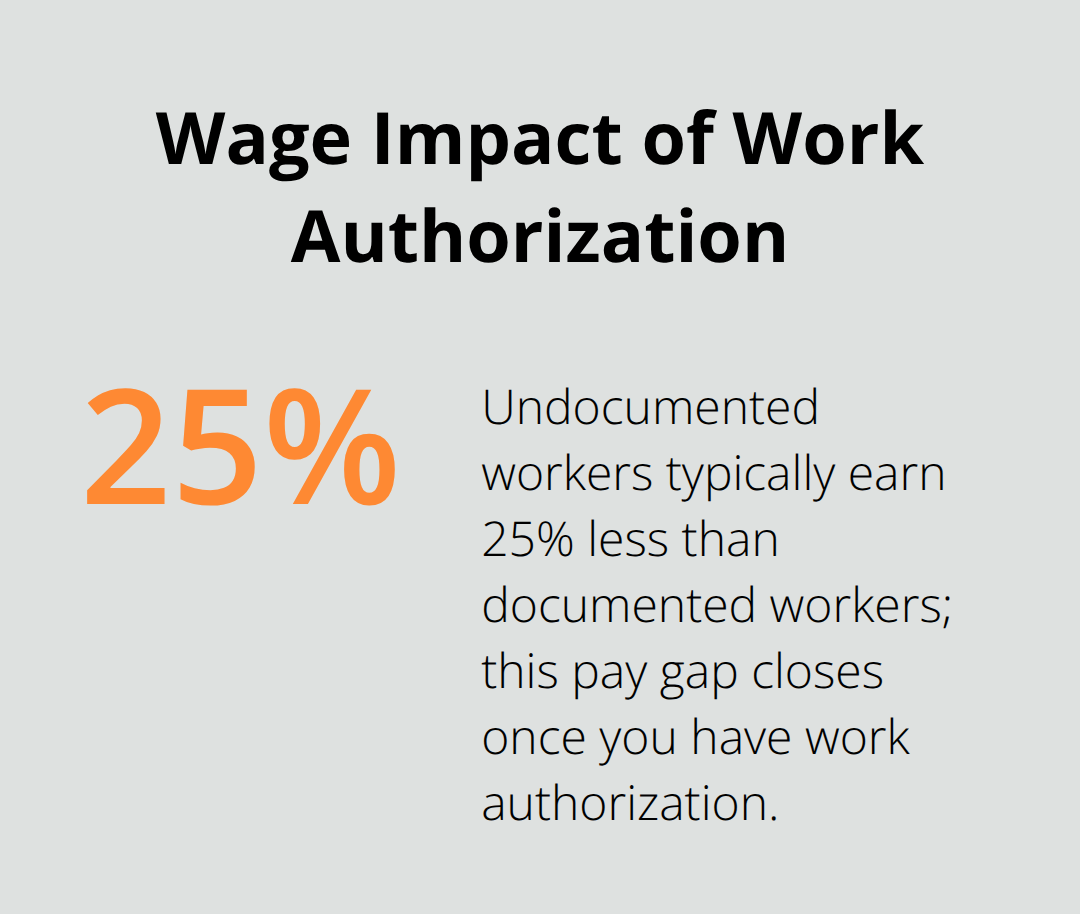
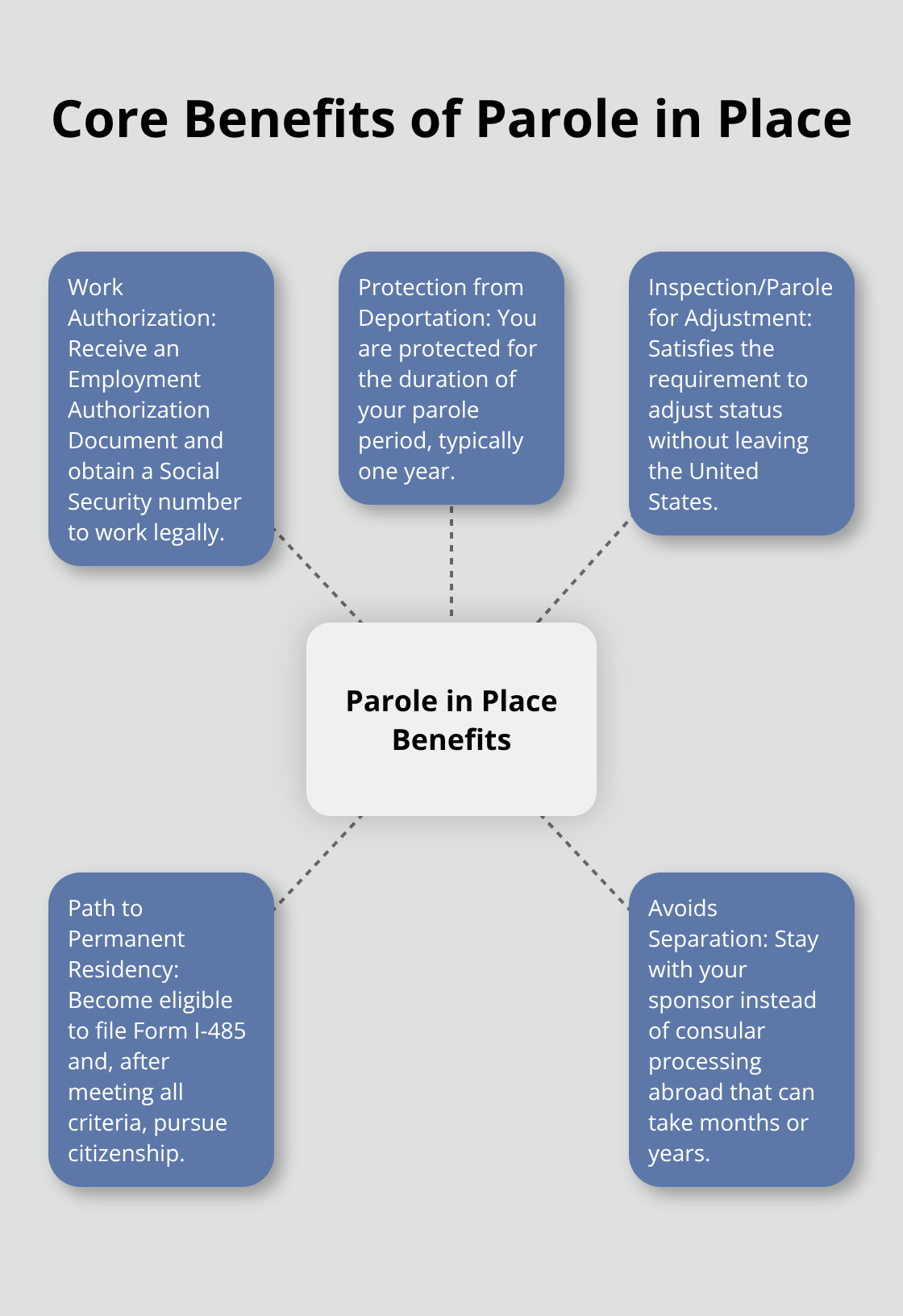
Parole in place approval delivers work authorization immediately upon approval, meaning you can legally accept employment and earn income without restriction. USCIS issues an Employment Authorization Document that employers recognize, and you can apply for a Social Security number using your work permit. Undocumented workers earn approximately 25% less than their documented counterparts, and that wage gap disappears once you hold work authorization.
You can change jobs freely, negotiate better pay, and build employment history that strengthens future visa applications.
Protection from Deportation During Parole Period
Parole in place grants you protection from deportation for the duration of your parole period, typically one year. Immigration enforcement cannot remove you from the country during that time, and you can live without the constant fear that shaped your life before approval. This protection applies throughout your parole term, giving you stability to plan your next steps.
The Inspection and Parole Requirement for Adjustment
Parole in place satisfies the inspection and parole requirement needed to adjust status to permanent residency without leaving the United States. This pathway matters enormously because it allows you to stay with your military service member sponsor while pursuing a green card, rather than facing the alternative of consular processing abroad, which can take months or years and requires separation from your family.
Converting Temporary Status to Permanent Residency
After USCIS approves your parole in place request, you become eligible to file Form I-485 for adjustment of status without departing the country. This is not guaranteed approval, but it eliminates one major barrier that blocks many undocumented immigrants from obtaining permanent residency. You must still demonstrate admissibility, meet income requirements through your sponsor’s affidavit, and satisfy all other adjustment conditions, but parole in place removes the need to pursue consular processing overseas. Once you obtain permanent residency, you can sponsor family members for immigration benefits, travel internationally with a returning resident permit, and apply for citizenship after five years of permanent residency.
Why Parole in Place Matters as Your Foundation
Treat parole in place as the essential first step, not the final destination, because the real security comes from converting that temporary status into permanent residency and eventually citizenship. The combination of work authorization, deportation protection, and adjustment eligibility transforms your legal position fundamentally (from undocumented to temporarily protected to permanently settled). This progression requires careful planning and proper documentation at each stage.
Final Thoughts
Military parole in place adjustment of status transforms your legal position from undocumented to temporarily protected, with work authorization and deportation protection that fundamentally change your family’s stability. The process demands accurate documentation, proper form completion, and submission to the correct USCIS address with the right fee, but these steps are manageable when you organize your military service records, family relationship evidence, and physical presence documentation beforehand. A missing document or incorrect address can result in case denial, which is why precision matters at every stage.
We at Law Offices of Jeffrey A. Thompson understand the complexity military families face and the urgency you feel when immigration uncertainty threatens your future. Attorney Thompson assists clients through the entire process, from paperwork preparation to overcoming legal obstacles, helping you achieve permanent residency and citizenship with representation tailored to your specific circumstances. Your military service member’s discharge status, your family relationship, and evidence of your physical presence in the country form the foundation that determines whether USCIS approves your application.
Start by gathering your military service documentation, organizing your family relationship evidence, and compiling your physical presence records today. If you have questions about your eligibility, the documents you need, or the adjustment process that follows parole approval, contact Law Offices of Jeffrey A. Thompson for a consultation. The sooner you begin, the sooner you can move from temporary protection toward permanent residency and citizenship.
Share this post: