Child immigration options: Paths to Permanent Residency for Your Family
July 20, 2026
Bringing a child into the United States through immigration is one of the most important decisions a family can make. We at Law Offices of Jeffrey A. Thompson understand that navigating child immigration options requires clear guidance and careful planning.
This guide walks you through the main pathways to permanent residency, the steps involved, and the obstacles you might face along the way.
Which Immigration Pathway Works for Your Child
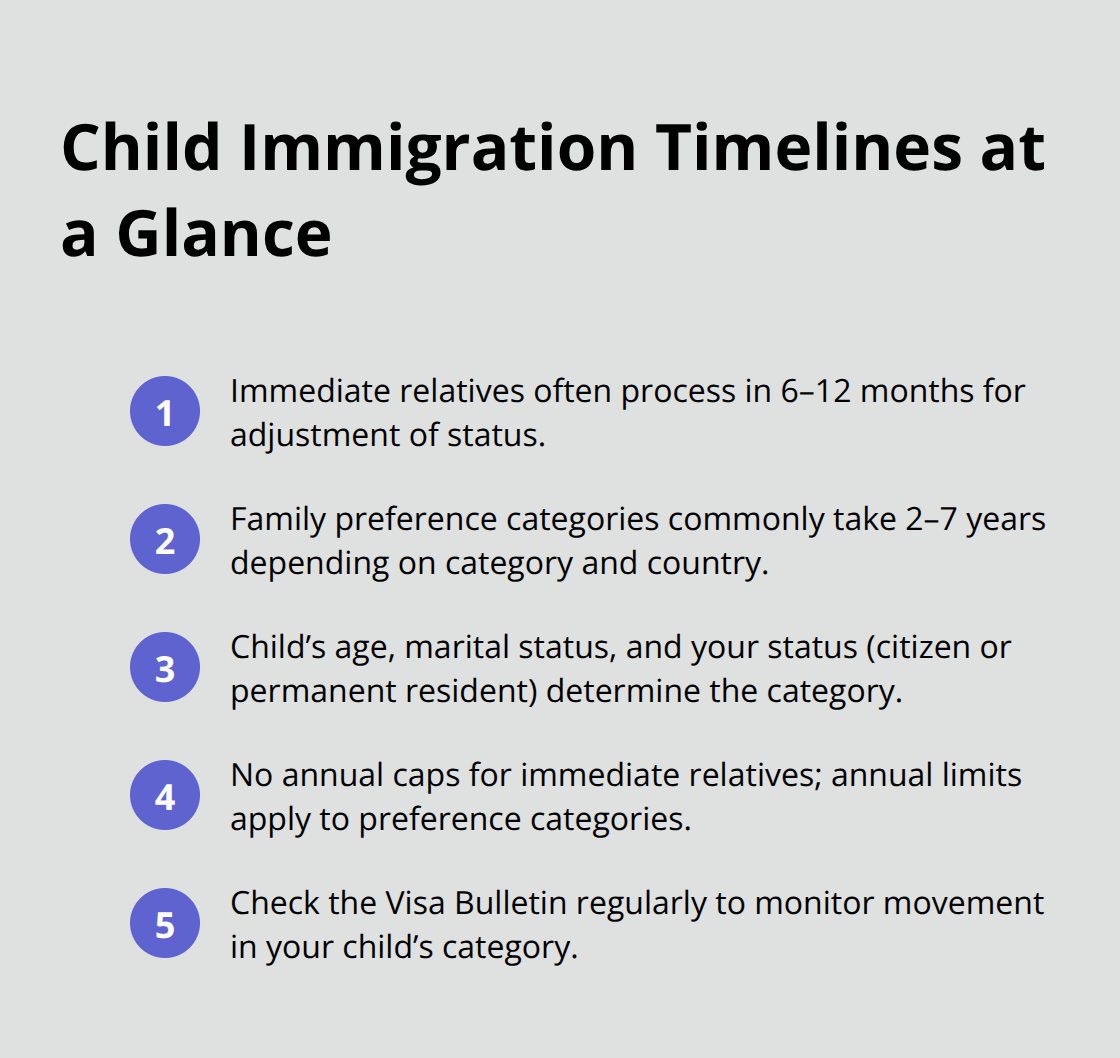
The pathway your child takes to permanent residency depends entirely on your family structure and current immigration status. If you are a U.S. citizen, your unmarried child under 21 qualifies as an immediate relative, which means no annual visa caps apply and a visa becomes available immediately upon filing. This is the fastest route available. If your child is 21 or older, married, or you are a permanent resident rather than a citizen, the timeline stretches significantly because your child enters preference categories with annual limits. USCIS data shows that immediate relative cases typically process faster than preference categories, often within 6 to 12 months for adjustment of status inside the United States, while family preference cases can take 2 to 7 years depending on the category and country of origin.
What Immediate Relative Status Means for Speed
Filing Form I-130 as an immediate relative petitioner eliminates the visa bulletin wait. Your child’s priority date becomes the filing date, and since immigrant visas for immediate relatives are unlimited, no backlog exists. This matters because every month of delay costs your family opportunities for work authorization, education, and stability. If your child is already in the United States and admissible, you can file Form I-485 concurrently with Form I-130, potentially accelerating the process further. The financial requirement is straightforward: Form I-864 Affidavit of Support requires you to demonstrate income at 125 percent of the federal poverty line (approximately $21,775 annually for a two-person household in 2026). If your income falls short, a joint sponsor or documented assets can bridge the gap, but this adds complexity and requires additional documentation.
Family Preference Categories and Extended Timelines
If your child does not qualify as an immediate relative, they enter family preference categories with annual visa allocations. The F2A category covers unmarried children under 21 of permanent residents, while F1 covers unmarried adult children of U.S. citizens, and F3 covers married children of citizens. These categories share an annual visa pool of roughly 226,000 visas across all family-based immigration, split among multiple preference levels. A child in the F1 category filed today might wait 5 to 10 years for visa availability depending on their country of origin, according to State Department visa bulletin data. This extended timeline prevents your child from working legally, attending school as a resident, or adjusting their status until a visa becomes available. You should discuss with your child whether they should remain in their home country, seek temporary nonimmigrant status if available, or explore alternative pathways.
Special Protections for Vulnerable Children
Children who have experienced abuse, abandonment, or neglect by a parent may qualify for Special Immigrant Juvenile Status, which provides a direct path to permanent residency without requiring a U.S. citizen or permanent resident petitioner. This category exists because these children have no viable family sponsor. A state court must determine that reunification with one or both parents is not viable due to abuse, neglect, abandonment, or a similar basis and that the child’s best interests are served through remaining in the United States. Once the court makes this determination, your child can file Form I-360 with USCIS. The advantage is significant: SIJ applicants bypass preference categories entirely and proceed directly to adjustment of status or consular processing.
Additional Pathways for Children Without Family Sponsors
Refugee and asylee children who have been in the United States for at least one year can adjust to permanent resident status without a family petition, making this another pathway independent of family sponsorship. If your child is a victim of human trafficking or a qualifying crime victim, they may be eligible for T or U visa status, which can lead to permanent residency after three years of continuous physical presence. These options exist specifically for children whose circumstances fall outside traditional family-based categories. Understanding which pathway applies to your situation requires careful review of your child’s circumstances and eligibility. The next section walks you through the specific steps and documentation you need to move forward with your chosen pathway.
How to File and Submit the Right Documents
Lock in Your Priority Date with Form I-130
Filing your I-130 priority date petition immediately is the single most important action you can take, because your priority date locks in on the filing date and determines your place in line for visa availability. The I-130 form itself is straightforward, but the documentation package determines whether USCIS approves or denies your petition. USCIS processes family-based petitions, and incomplete filings cause unnecessary delays that can stretch your timeline by months.
Gather the Documentation USCIS Requires
You need to submit your government-issued identification proving your status as either a U.S. citizen or permanent resident, your child’s birth certificate establishing the parent-child relationship, and any marriage certificates or divorce decrees if you have been married more than once. If your child was adopted, the final adoption decree and proof of two years of legal custody and two years of physical custody are required. If your child is a stepchild, provide the birth certificate, your marriage certificate to the child’s biological parent, and termination documents for any prior marriages.
Name-change documents for you or your child must be included if either of you has legally changed your name. The Affidavit of Support Form I-864 requires you to demonstrate financial capacity at 125 percent of the federal poverty line and submit tax returns from the past two years, W-2 forms, and recent pay stubs. If your income is insufficient, a joint sponsor can co-sign the I-864 using their own income and assets, but this requires that person to complete a separate form and provide their own financial documentation.
USCIS requires original or certified copies of certain documents, not photocopies, so order certified birth certificates and court documents in advance rather than submitting unverified copies that will be rejected.
Choose Adjustment of Status or Consular Processing
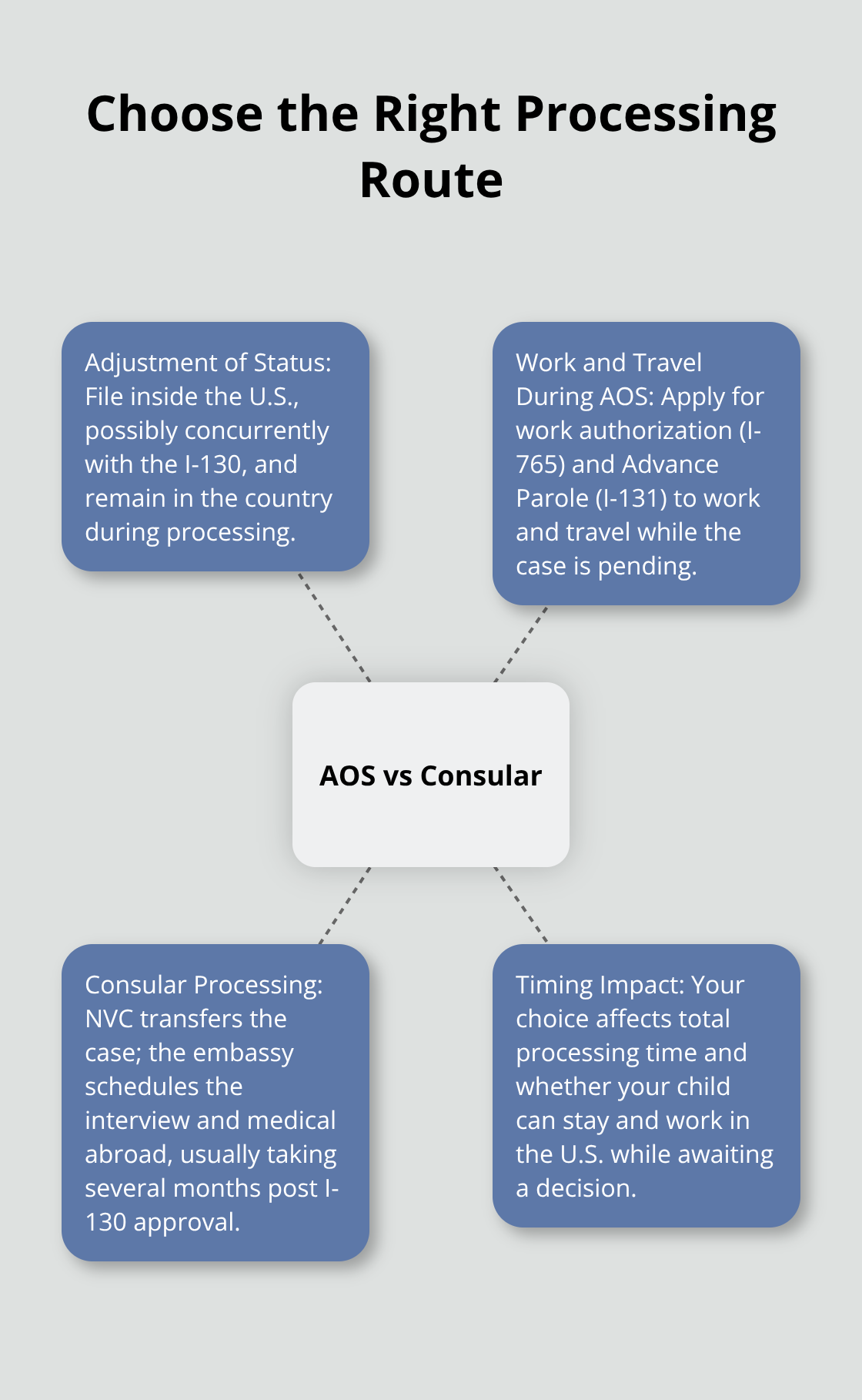
Your next decision is whether your child will complete the process inside or outside the United States, and this choice dramatically affects your timeline and your child’s work authorization options. If your child is already in the U.S. and was inspected and admitted or paroled upon entry, they can file Adjustment of Status concurrently with the I-130, potentially allowing them to remain in the country while the case processes. Upon approval, your child becomes a permanent resident immediately.
If your child is outside the United States, the case proceeds through consular processing after I-130 approval, meaning the National Visa Center forwards the file to the appropriate U.S. Embassy or Consulate, which then contacts your child with instructions for the visa interview and medical examination. Consular processing typically takes several months after I-130 approval depending on the consulate’s workload.
Secure Work Authorization and Travel Permission During Processing
During I-485 adjustment, your child can apply for work authorization using Form I-765 and travel permission using Form I-131 Advance Parole, which means they can legally work and travel while waiting for the final decision. However, if your child leaves the United States without Advance Parole, the I-485 application is automatically abandoned and they lose their place in line.
Complete the Medical Examination with a USCIS-Designated Civil Surgeon
The medical examination required for both pathways must be completed by a USCIS-designated civil surgeon, not your family doctor, and includes vaccination records review, physical examination, and laboratory testing for certain communicable diseases. Your child cannot proceed to the final interview or decision without this examination completed on Form I-693, so schedule the civil surgeon appointment early because backlogs at some facilities can delay this step by weeks. Once you have submitted your documentation and your child has completed the medical examination, USCIS will schedule the background check and final interview, which brings you closer to the moment your child receives permanent resident status.
Real Obstacles That Delay Your Child’s Case
Visa Availability Backlogs Create Years of Waiting
Visa availability backlogs represent the most significant delay factor for family-based immigration, and the wait times are not hypothetical. According to the State Department’s Visa Bulletin from July 2026, F1 category applicants from the Philippines filed in 2015 are just now becoming current, meaning an 11-year wait for visa availability alone. For F2A cases involving permanent residents, the timeline varies dramatically by country-Mexico and the Philippines have multi-year backlogs, while applicants from most other countries see current dates. Your child cannot adjust status or proceed to consular processing until their priority date becomes current, so you need to check the Visa Bulletin monthly and understand whether your child’s category and country are moving forward or stalled.
If your child is in a severely backlogged category, limited options exist. One realistic approach involves exploring whether your child qualifies for an alternative pathway, such as employment-based sponsorship if they have work skills, or Special Immigrant Juvenile Status if they meet the abuse or neglect criteria. If neither applies, your child may need to remain in their home country or pursue temporary nonimmigrant status to advance their education or career while waiting. Backlogs have persisted for decades in certain categories and preference levels, so you should not assume the process will accelerate.
Inadmissibility Grounds Can Derail Your Entire Case
Inadmissibility grounds can derail your entire case if you do not identify them before filing. Common grounds include prior visa fraud, deportation, certain criminal convictions, communicable diseases, and lack of admissibility waivers. If your child was previously deported or has a criminal conviction (even minor offenses like drug possession or assault), these can trigger inadmissibility that requires a waiver.
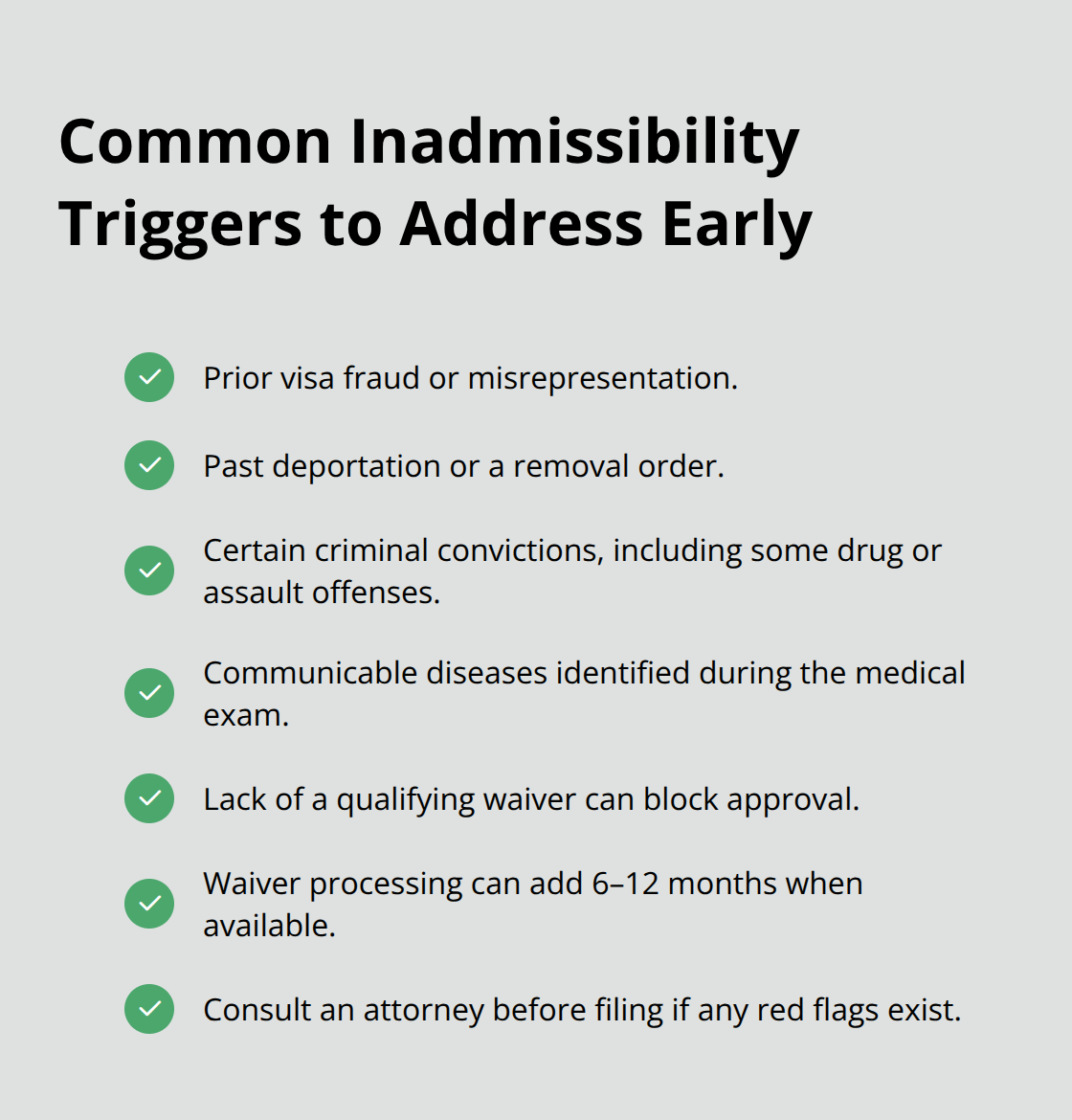
Form I-601 Application for Waiver of Grounds of Inadmissibility exists for this situation, but not all grounds qualify for a waiver, and the process adds 6 to 12 months to your timeline.
If your child has a medical condition like tuberculosis, USCIS-designated civil surgeons screen for this during the medical examination, and your child cannot proceed without treatment or a medical waiver. The practical step involves consulting with an immigration attorney before filing if your child has any criminal history, prior immigration violations, or medical concerns. Addressing these issues upfront prevents your case from becoming significantly more complicated and expensive after filing.
Documentation Gaps Cause Denials and Delays
Documentation gaps represent a major obstacle that causes USCIS denials or delays. USCIS rejects cases when applicants submit photocopies instead of certified documents, miss name-change records, or fail to include divorce decrees showing termination of prior marriages. If your child was adopted, the final adoption decree must show the adoption was finalized, not just pending. If the biological parents were never married, you may need to provide evidence of the parent-child relationship beyond the birth certificate, which requires additional court documents or DNA testing in some cases.
Order all certified documents at least 60 days before filing because government offices move slowly and some countries take months to issue certified records. Keep a checklist of every document USCIS requires for your specific category and verify each item is certified and original before submitting. An immigration attorney can review your documentation package before filing to catch gaps that would otherwise cause rejection or delay.
Final Thoughts
Your child’s path to permanent residency depends on your family structure, your immigration status, and your child’s individual circumstances. Child immigration options range from immediate relative visas that process within months to family preference categories that require years of waiting, plus specialized pathways for vulnerable children who have experienced abuse or neglect. The filing process demands precise documentation, accurate completion of complex forms, and awareness of obstacles like visa backlogs and inadmissibility grounds that can derail your case if you do not address them proactively.
An immigration attorney reviews your specific circumstances, identifies potential problems before you file, and ensures your documentation package is complete and certified. We at Law Offices of Jeffrey A. Thompson assist clients in navigating the immigration process from paperwork through overcoming legal hurdles, helping families achieve their American dreams. Attorney Thompson provides expert guidance tailored to your family’s needs and circumstances.
Your next step is to gather your documents, verify your child’s eligibility for the pathway that applies to your situation, and consult with an immigration professional who can review your case before you file. Filing Form I-130 locks in your priority date, so timing matters. Contact Law Offices of Jeffrey A. Thompson to discuss your family’s immigration journey and begin the process of bringing your child to permanent residency in the United States.
Share this post: