Green Card Through Marriage: A Realistic Timeline
July 10, 2026
Getting a green card through marriage is one of the fastest immigration pathways available, but the timeline still requires patience and precision. At Law Offices of Jeffrey A. Thompson, we’ve guided countless couples through this process and know exactly what to expect at each stage.
The reality is that most marriage-based green card applications take between 18 to 36 months, depending on your circumstances. Understanding the steps ahead helps you prepare properly and avoid costly delays.
What Makes You Eligible for a Marriage-Based Green Card
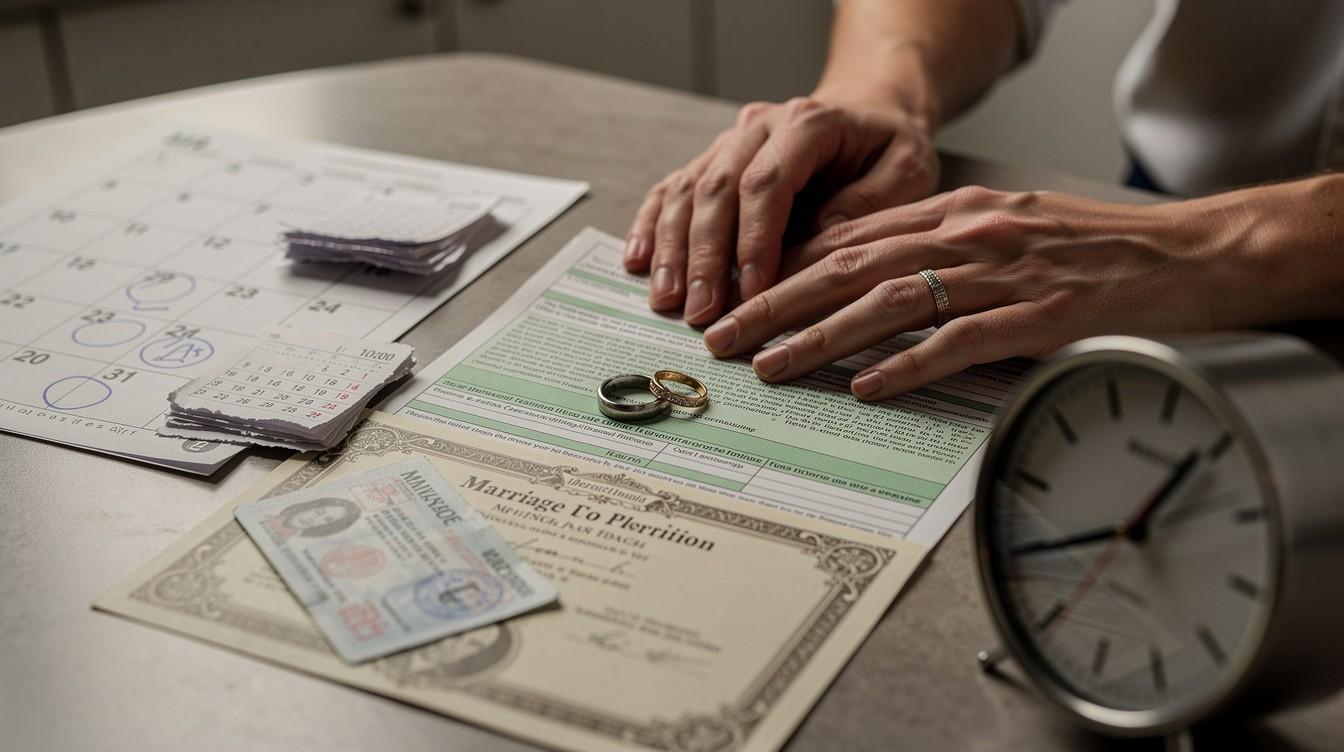
To qualify for a marriage-based green card, you need three things: a legally valid marriage, proof that the marriage is genuine, and financial stability from your sponsoring spouse. USCIS takes each requirement seriously, and missing even one document triggers a request for evidence that delays your case by 3 to 6 months. The marriage certificate itself is just the starting point. USCIS wants to see that you actually live together as a married couple, not that you married solely for immigration purposes.
Proving Your Marriage Is Genuine
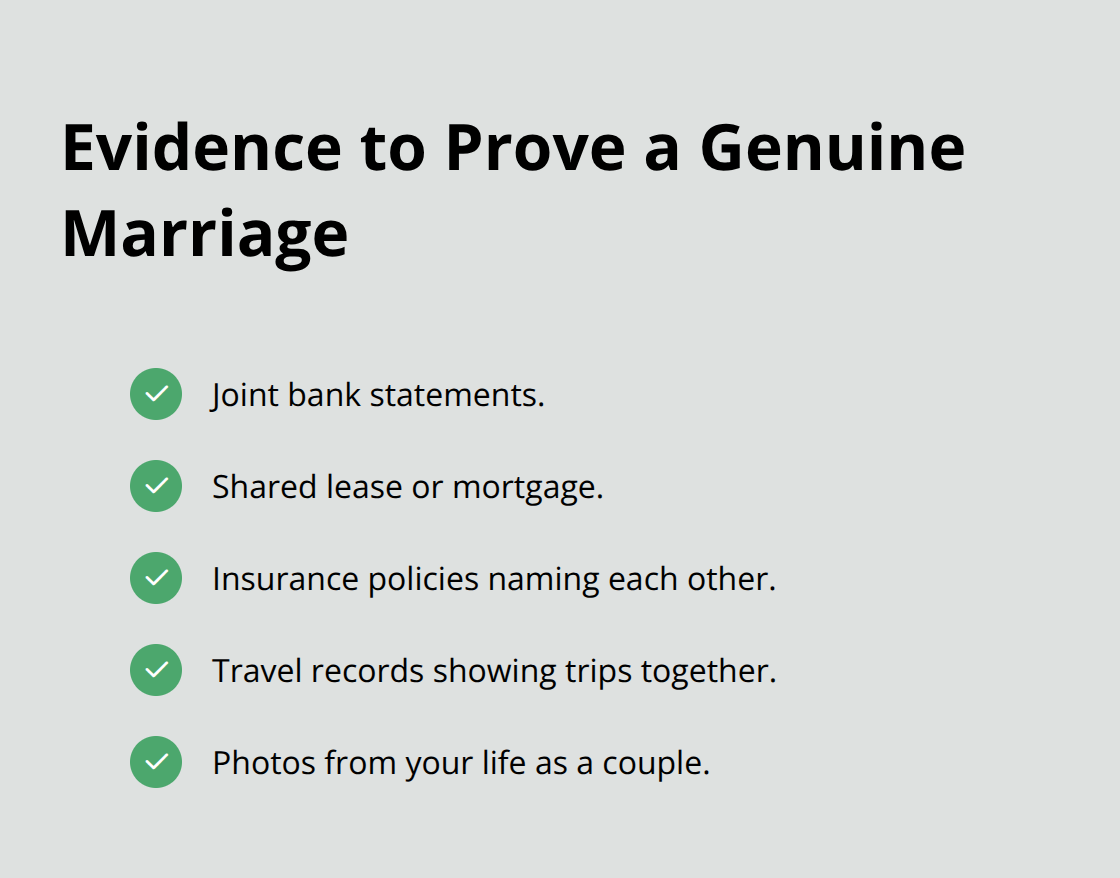
You must submit joint bank statements, shared lease agreements, insurance policies naming each other as beneficiaries, travel records showing you’ve vacationed together, and photos from your life as a couple. The more recent and varied your evidence, the stronger your case.
A couple in Michigan submitted their I-130 and I-485 on September 1 and September 5, 2025, and completed their interview by December 4, 2025, in part because they had meticulous documentation of their relationship ready from day one. They did not waste time scrambling for evidence during processing.
Your Sponsor’s Financial Responsibility
Your sponsor must prove they earn enough to support you without relying on government benefits. USCIS requires Form I-864, an Affidavit of Support, which legally binds your sponsor to you for up to ten years or until you become a U.S. citizen. The income threshold depends on household size and changes annually.
If your sponsor does not meet this income alone, they can use joint income with a spouse, income from household members who sign their own I-864 form, or assets like savings or property. Prepare recent tax returns (the last two years), current pay stubs, and W-2 forms from your sponsor’s employer. USCIS scrutinizes these documents carefully because they want assurance that you will not become a public charge. If your sponsor’s income is borderline, submitting additional documentation like bank statements showing savings or rental income strengthens the case significantly.
Medical Exams and Background Checks
You must complete a medical examination with a USCIS-designated civil surgeon before your interview. The exam costs between $200 and $500 and includes vaccinations, chest X-rays, and screening for communicable diseases. The I-693 form documents your exam results and remains valid for two years from the date issued. Time this strategically so your medical exam does not expire before your interview.
USCIS also runs background checks on your criminal and immigration history. Any criminal convictions, prior deportations, or fraud can make you ineligible. Be honest about your past on your application because USCIS will find inconsistencies. If you have a criminal record or immigration issues, consult an immigration attorney before filing because some crimes are grounds for permanent ineligibility, while others may qualify for waivers under specific circumstances. Once you understand your eligibility and gather the required documentation, the next step involves filing the actual petition forms and navigating the processing stages that follow.
How to File Your Marriage Green Card Petition
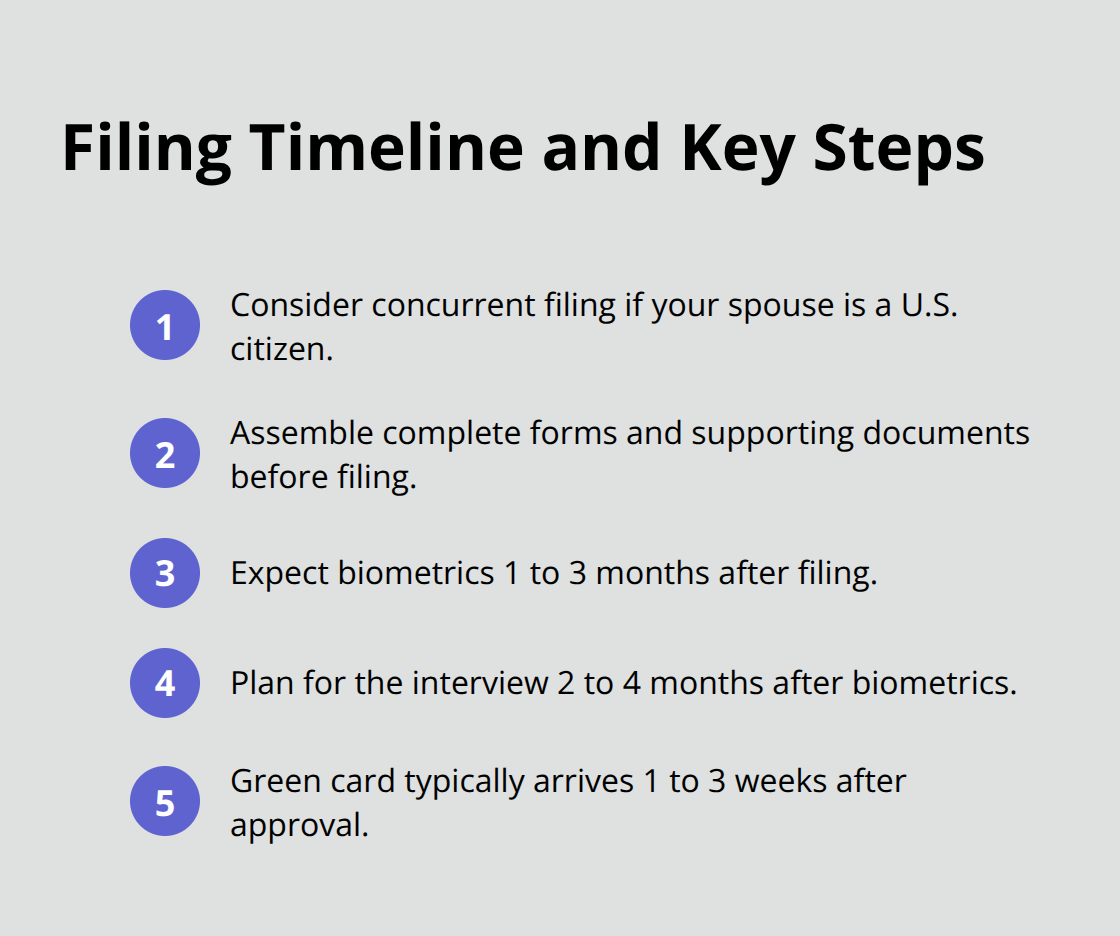
Filing your marriage-based green card petition involves submitting two critical forms: the I-130 Petition for Alien Relative and the I-485 Application to Adjust Status. If your spouse is a U.S. citizen, you can file both forms simultaneously using a concurrent filing strategy, which saves time compared to filing them sequentially. This approach represents one of the most important decisions you will make. According to USCIS processing times, the I-130 alone takes 9 to 13 months on average, while the I-485 adds another 8 to 16 months when processed separately.
Gather Documents Before You File
Start gathering your documents immediately: your marriage certificate, your sponsor’s birth certificate and citizenship proof, recent tax returns covering two years, current pay stubs, and the completed I-864 Affidavit of Support. Do not wait until the filing deadline approaches because incomplete applications trigger requests for evidence that delay your case by 3 to 6 months according to USCIS data. A Michigan couple married on August 6, 2025, filed their I-130 on September 1 and their I-485 on September 5 of the same year. They received their green card on December 17, 2025, completing the entire process in just 4.5 months. This speed resulted directly from concurrent filing, meticulous documentation, and working with an experienced immigration attorney who coordinated submissions properly. Submit your I-130 electronically through USCIS online systems whenever possible, as this reduces processing variability and allows faster tracking.
Choose Your Processing Path
After filing, your case takes one of two paths depending on where your spouse lives. If your spouse is already in the United States with valid immigration status, you pursue adjustment of status, which means the interview and final approval happen at a USCIS field office near your home. This domestic route typically takes 10 to 17 months total and allows you to remain in the country throughout processing. If your spouse lives outside the United States, the case goes through consular processing, which sends your approved I-130 to the National Visa Center and then to a U.S. embassy or consulate in your spouse’s country of residence. Consular processing adds 12 to 24 months because it includes additional steps like the DS-260 form completion and an overseas interview.
Complete Your Biometrics Appointment
Between filing and your interview, USCIS schedules a biometrics appointment where you provide fingerprints, photographs, and signatures for background checks. This appointment typically arrives 1 to 3 months after filing and takes about 15 minutes at a designated Application Support Center. The Michigan couple received their biometrics notice on September 12, 2025, and completed the appointment in Warren, Michigan, on September 30, 2025. Attend this appointment on time because missing it can delay your entire case by several months.
Prepare for Your Interview
Your interview notice arrives after biometrics are processed, usually 2 to 4 months later. Prepare for your interview by bringing original documents: both passports, driver’s licenses, your marriage certificate, birth certificates, and any updated financial documents. Bring originals of joint bank statements, lease agreements, insurance policies, and photos showing your life together. The USCIS officer will review these documents on screen and ask questions designed to verify your marriage is genuine. Both spouses should attend the interview and answer questions together rather than one person dominating responses. This demonstrates comfort with each other and reinforces authenticity. The Michigan couple pursued adjustment of status and completed their interview in Troy, Michigan, on December 4, 2025, just two months after receiving their interview notice. They were asked straightforward questions about how they met, why they chose each other, and how moving in together felt. The entire interview lasted 25 to 30 minutes. The officer verbally approved their case on the spot, and they received their green card by mail within weeks.
After the interview, the officer will either approve your case on the spot, request additional evidence, or deny it. Approvals typically result in your green card being produced within 1 to 3 weeks and mailed to your address. Once you receive your green card, you enter the next critical phase: understanding what happens if your marriage is less than two years old at approval and what steps you must take to maintain your permanent resident status.
How Long Does a Marriage-Based Green Card Actually Take
The realistic timeline for a marriage-based green card spans 10 to 24 months when you file from inside the United States, though this number varies significantly based on your specific circumstances and field office location. If your spouse lives abroad, add 12 to 24 additional months because consular processing requires your approved I-130 to transfer to the National Visa Center and then to a U.S. embassy or consulate overseas. According to USCIS processing times, the I-130 petition itself takes 9 to 13 months for most service centers, while the I-485 adjustment of status adds another 8 to 16 months depending on your local field office.
Speed Varies by Location and Strategy
The Michigan couple we mentioned earlier compressed this timeline to just 4.5 months because they filed concurrently, submitted complete documentation, and worked with an experienced attorney who coordinated every submission. However, their case represents the exception, not the rule. Most couples should plan for 18 to 24 months and prepare for the possibility of delays that extend beyond this window.
Processing speed depends heavily on your USCIS field office. Ohio field offices currently run 2 to 3 months slower than national averages, with some offices processing I-485 applications in 14 to 18 months instead of the standard 8 to 16 months. If you file in a major metropolitan area with high immigration volume, expect longer waits.
Common Delays That Add Months to Your Timeline
Requests for evidence add months to your timeline because USCIS gives you 84 days to respond, and then the officer must review your submission. Missing documents, unclear photocopies, or incomplete forms trigger these requests immediately. The Michigan couple avoided RFEs entirely because they submitted clear driver’s licenses, legible birth certificates, and organized financial documentation at their interview.
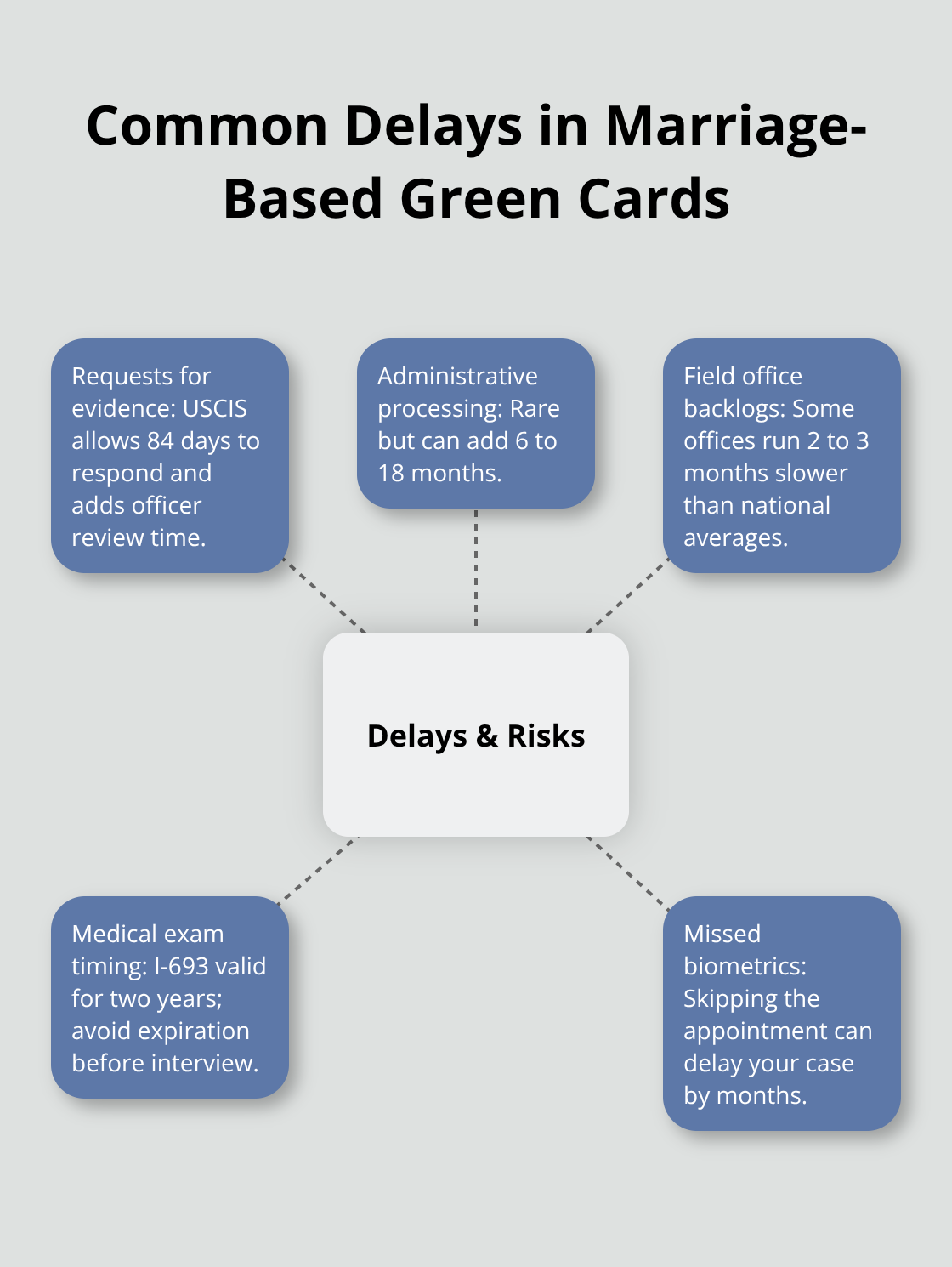
Administrative processing for background checks can add another 6 to 18 months in rare cases, though most marriage cases clear this stage quickly. Once you receive your approval notice, the physical green card arrives within 1 to 3 weeks.
Plan Conservatively for Your Timeline
Try to assume your case will take 20 to 24 months and celebrate if it arrives faster. Do not plan major life decisions around optimistic timelines. This conservative approach prevents disappointment and allows you to prepare financially and emotionally for the full duration of the process.
Final Thoughts
A green card through marriage requires three things: realistic expectations about your timeline, complete and accurate documentation, and professional guidance from someone who understands the process. Most couples should plan for 18 to 24 months when filing from inside the United States, though your specific field office and preparation level will determine whether you finish faster or encounter delays. The Michigan couple we referenced throughout this guide completed their entire process in 4.5 months because they gathered documents early, filed concurrently, and had professional coordination at every step-but their experience represents an exception, not the standard outcome.
Incomplete applications represent the single biggest mistake couples make. Missing documents, unclear photocopies, or unsigned forms trigger requests for evidence that add 3 to 6 months to your timeline, and you cannot recover this lost time. Conversely, submitting a complete file with clear originals, organized financial records, and strong evidence of your genuine marriage relationship moves your case forward without interruption. Immigration law contains traps that cost applicants months or years, so an experienced immigration attorney helps you choose the correct filing path, ensures your documentation meets USCIS standards, and coordinates submissions so nothing falls through the cracks.
We at Law Offices of Jeffrey A. Thompson assist clients in navigating the immigration process from paperwork to overcoming legal hurdles, helping them achieve their American dreams. Contact us for expert guidance tailored to your specific situation and start your green card through marriage process today. The sooner you begin, the sooner you will hold your green card in hand.
Share this post: