Naturalization Exam Requirements: What to Study for Your Citizenship Test
July 6, 2026
The naturalization exam requirements can feel overwhelming, but they’re designed to be fair and achievable. We at Law Offices of Jeffrey A. Thompson help clients prepare for this important milestone every day.
This guide breaks down exactly what you need to study: English language skills, civics knowledge, and practical test-day strategies. You’ll find concrete resources and tips to build your confidence before exam day.
English Language Skills You’ll Face on the Naturalization Exam
Speaking and Understanding in Real Conditions
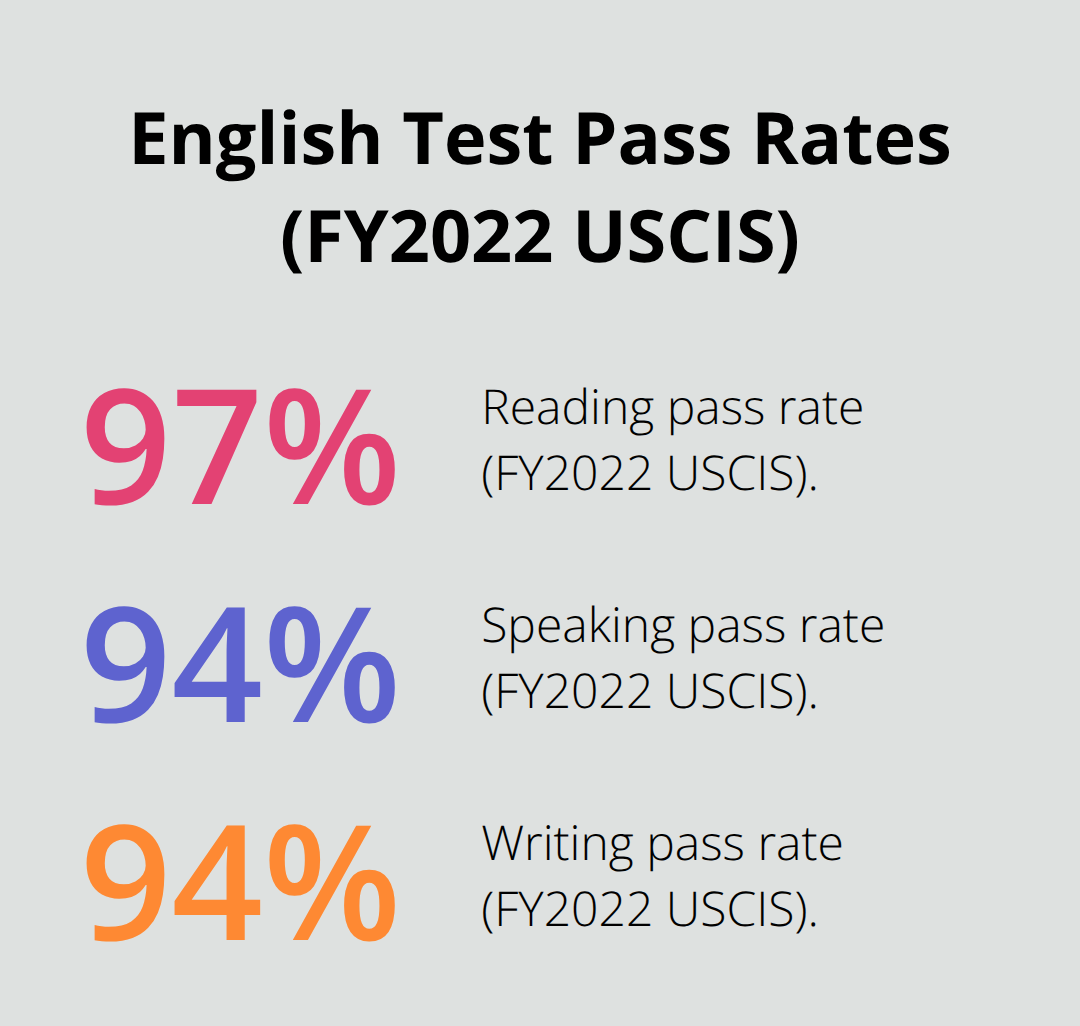
The English language portion of the naturalization exam tests four distinct abilities: speaking, understanding, reading, and writing. According to USCIS data from fiscal year 2022, most applicants excel in these areas, with reading posting the highest pass rate at 97%, followed by speaking at 94%, understanding at 93%, and writing at 94%. These numbers reveal something important: the exam isn’t designed to make you fluent.
It’s designed to confirm you can function in everyday English.
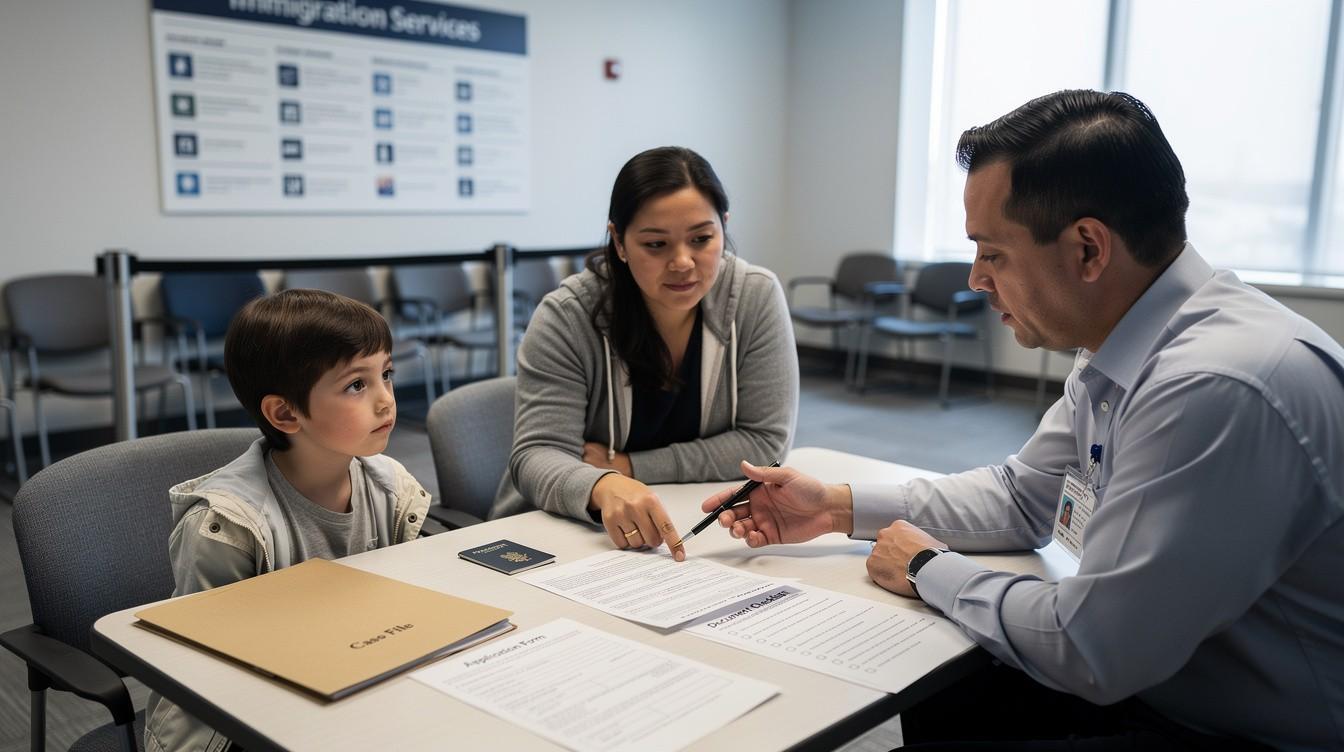
The USCIS officer conducting your interview assesses your speaking and understanding ability through normal conversation during your eligibility interview, so you face real conditions, not isolation. Officers ask straightforward questions about your background, your N-400 application, and your understanding of the oath. Speaking clearly and pausing to understand the question matters far more than perfect pronunciation. If you don’t understand something, say so. The officer will rephrase. This is normal and expected.
Reading and Writing: A Focused Approach
The reading and writing requirements are genuinely straightforward if you approach them strategically. USCIS provides Reading Test Vocabulary List and Writing Test Vocabulary List on the Citizenship Resource Center to guide your preparation. These lists show exactly what words and sentence patterns appear on the actual exam, eliminating guesswork.
For reading, you only need to read one sentence correctly out of three options the officer provides. For writing, you must write one sentence correctly from three options. This narrow focus means your study should concentrate on practical, conversational English and simple sentence construction rather than advanced grammar or vocabulary. Many applicants waste time studying complex material when the real test demands basic competency. Try the official vocabulary lists, practice writing simple present-tense sentences about everyday topics, and read the sample sentences USCIS publishes repeatedly until they feel natural.
Building Your Practical English Foundation
Your goal is to demonstrate you can communicate adequately in English, not to impress anyone with eloquence. Focus on the official vocabulary lists and the sample sentences USCIS provides. The exam tests whether you can handle everyday interactions-ordering food, answering questions about your family, discussing your work history. These are the conversations that matter for your life in the United States.
With your English foundation established, the next critical component of your naturalization exam involves civics knowledge. Understanding U.S. government structure, citizen rights, and historical facts will round out your preparation and move you closer to citizenship.
What the Civics Test Actually Covers
The civics portion of the naturalization exam tests your knowledge of U.S. government structure, citizen rights, and American history. The test format depends on when you file your N-400 application. If you file before October 20, 2025, you’ll face the 2008 civics test: an oral exam with up to 10 questions from a pool of 100, and you need 6 correct answers to pass. If you file on or after October 20, 2025, you’ll take the 2025 civics test: 20 oral questions from a pool of 128, requiring 12 correct answers to pass.
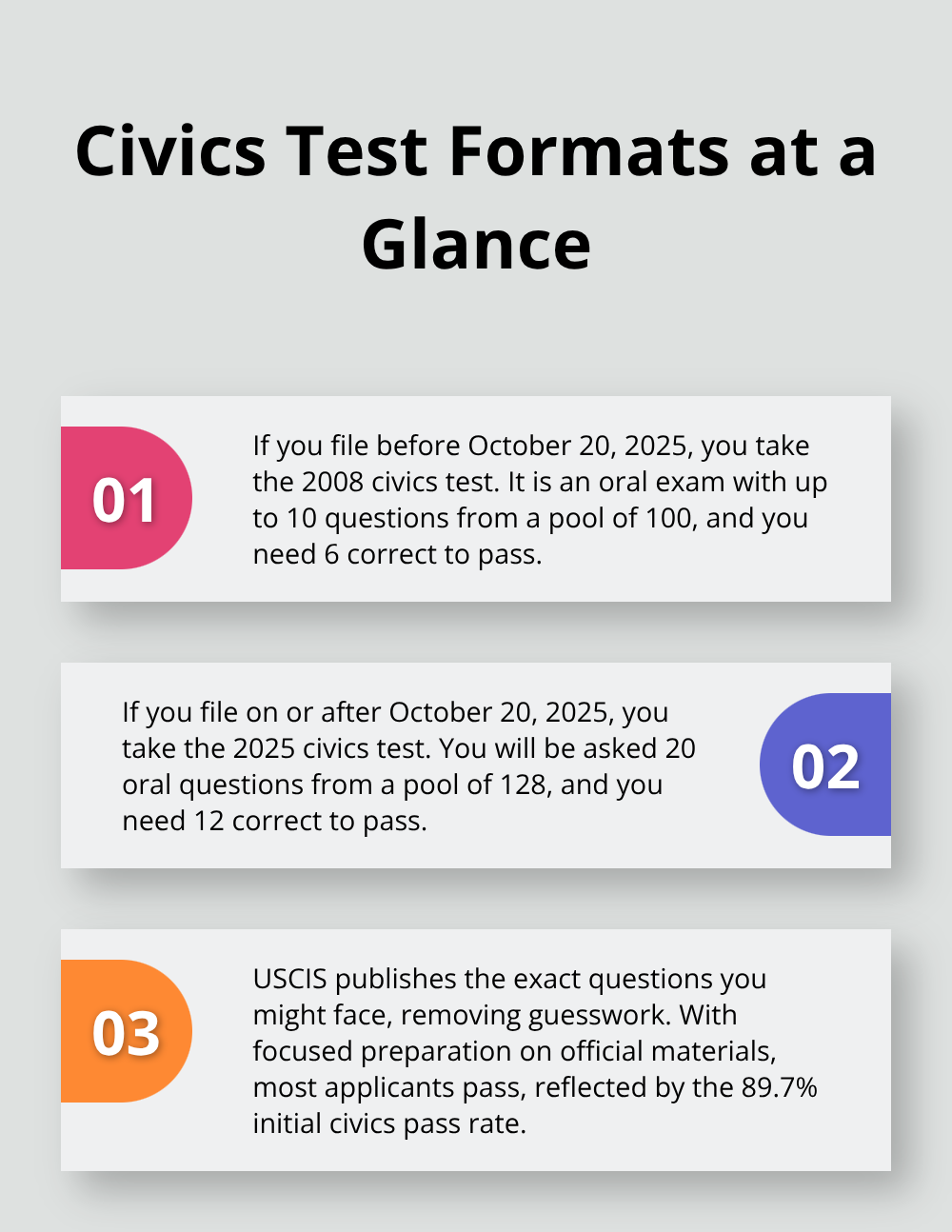
According to USCIS data, the civics pass rate for all applicants reached 89.7% on the initial exam, which means the test is designed to be passable if you prepare strategically. The key is understanding that USCIS publishes the exact questions you might face, so there’s no guessing about content.
The Three Core Areas USCIS Tests
The civics test focuses on three concrete areas: how U.S. government actually works, what rights and responsibilities citizens have, and specific historical facts about the Constitution and American history. For government structure, you need to know how many senators each state has, how many representatives serve in Congress, who the current President and Vice President are, and how the three branches of government divide power. For citizen rights and responsibilities, USCIS tests knowledge of freedoms guaranteed by the Bill of Rights, the voting process, jury duty, and the obligation to follow laws. For historical knowledge, expect questions about when the Constitution was written, what the Declaration of Independence stated, and key historical figures like George Washington and Abraham Lincoln.
Official Study Materials Eliminate Guesswork
USCIS publishes the exact questions you might face, so you study from official question pools, not from vague civics concepts. The official study materials are free on the USCIS Citizenship Resource Center, including the 100 Civics Questions and Answers for the 2008 test and the 128 Civics Questions and Answers for the 2025 test. These documents show the exact wording of questions and acceptable answers, eliminating ambiguity. Many applicants waste time studying general civics textbooks when the official question lists tell you precisely what to memorize. Try the official question list for your test year, read each question and answer aloud multiple times, and use the audio and flashcard resources USCIS provides to reinforce memorization through different learning methods.
Special Accommodations for Older Applicants
If you’re 65 or older and have been a lawful permanent resident for 20 years or more, you qualify for a significant accommodation: you answer only 10 questions from a smaller bank of 20, and you may take the test in your native language. This special provision means your study burden is substantially lighter if you qualify. The practical strategy remains straightforward: download the official question list for your test year, read each question and answer aloud multiple times, and use the audio and flashcard resources USCIS provides to reinforce memorization through different learning methods.
With your civics foundation in place, you’ll want to develop a study plan that combines these official materials with practical test-day strategies. The next section covers exactly how to structure your preparation and what resources will accelerate your progress toward citizenship.
How to Study Effectively Without Wasting Time
The most common mistake applicants make is studying materials that won’t appear on the exam. USCIS publishes the exact questions you’ll face, which means you can eliminate guesswork entirely. For the 2025 test, grab the 128 Civics Questions and Answers list from the USCIS Citizenship Resource Center. These aren’t suggestions or study guides-they’re the actual question pools. Read each question and answer aloud at least five times. Audio resources on the USCIS Citizenship Resource Center let you listen to native speakers pronounce answers, which strengthens both your listening comprehension and your ability to speak naturally. Flashcard versions in English and Spanish reinforce memorization through repetition without monotony. The Civics Practice Test available on the same resource simulates the actual exam format, showing you exactly how questions are asked and timed. Most applicants who fail do so because they studied vague civics concepts instead of the specific questions USCIS actually asks. Your study strategy should take no more than four to six weeks if you focus on official materials exclusively.
Study the Way You’ll Be Tested
The civics test is oral, not written, so reading answers silently wastes your preparation time. Speak your answers aloud every single time you practice. Record yourself answering questions and listen back to identify unclear pronunciation or hesitation. The speaking portion of the English test accounts for your ability to communicate in real conversation during your interview, which means practicing with another person yields better results than solo study. If you know someone preparing for naturalization, quiz each other using the official question lists. The USCIS also offers a Civics Flashcard resource available in pocket-size format, making it practical to review questions during your commute or lunch break. For reading and writing practice, focus exclusively on the vocabulary lists USCIS provides. Don’t study complex literature or advanced grammar-study the exact sentence patterns and words that appear on the actual test. Write out the three sample sentences for the writing portion multiple times until your handwriting is clear and your spelling is automatic. The reading portion requires only one correct sentence read aloud from three options, so your goal is to recognize and pronounce familiar words accurately, not to interpret complex text.
Use Official Resources and Verify Current Information
The USCIS Citizenship Resource Center houses all official study materials free of charge, including the One Nation, One People study guide for the 2025 test, the Citizen’s Almanac, and Learn About the United States: Quick Civics Lessons for modular study sessions. All these materials align directly with actual test content. Avoid non-official blogs, private test prep companies, and outdated study guides.
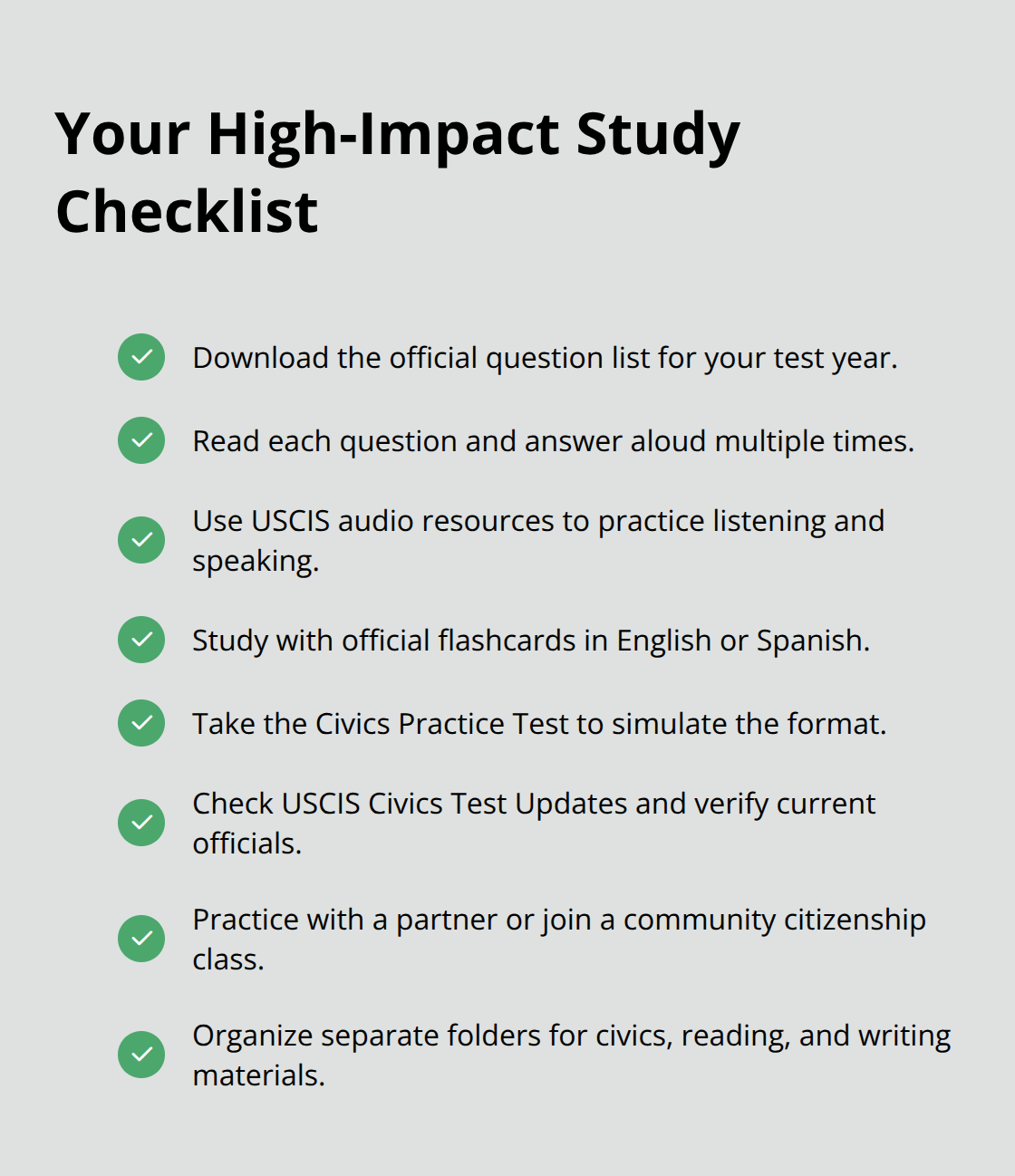
Some civics answers change when federal officials are elected or appointed-for example, the current President, Vice President, Chief Justice, and Speaker of the House. The USCIS publishes Civics Test Updates pages to flag these changes. Check these pages immediately before your interview to confirm you’re answering with the names of officials currently serving. Verify current senators and representatives using Senate.gov and House.gov. Find your state governor through usa.gov/states-and-territories. This verification step takes fifteen minutes and prevents failure on questions where the answer has recently changed. Your preparation time is too valuable to waste on materials that contradict official USCIS content.
Practice With a Partner for Real Conversation Skills
Another person quizzes you on the official question lists, which simulates the actual interview environment far better than solo practice. Your interview officer will ask follow-up questions based on your answers, so practicing with a partner helps you think on your feet and respond naturally rather than reciting memorized text. If no one in your circle is preparing for naturalization, consider joining a community citizenship class (many libraries and community centers offer these free). These classes connect you with other applicants and provide structured practice sessions. The speaking and understanding portions of your English test depend on your ability to communicate in real conditions, not in isolation. Practicing aloud with another person trains your ear to understand different accents and speaking speeds, which matters when you face your USCIS officer.
Organize Your Materials by Test Format
Create separate study folders for civics, reading, and writing materials. For civics, print the official question list and mark off each question as you master it. For reading and writing, use the vocabulary lists USCIS provides and create flashcards with the exact sentences that appear on the test. The Civics Flashcard resource in pocket-size format fits in your bag, making it practical to review during commutes or breaks. Audio versions of the civics questions let you listen while you drive or exercise, which multiplies your study time without requiring you to sit at a desk. This multi-format approach (reading, listening, speaking, and writing) reinforces the material through different learning channels and prevents boredom during your four to six week preparation period.
Final Thoughts
Your naturalization exam requirements break down into three manageable components: English language skills, civics knowledge, and test-day execution. The data shows that 95.7% of applicants pass the naturalization exam, which means success is the norm when you prepare strategically with official materials. You’ve learned that USCIS publishes the exact questions you’ll face, eliminating guesswork entirely.
Download the official question list for your test year from the USCIS Citizenship Resource Center, print it, and start reading answers aloud. Set a study schedule that fits your life, whether that’s thirty minutes daily or longer sessions on weekends. Quiz yourself using the official flashcards and audio resources, and verify current government officials before your interview using the USCIS Civics Test Updates pages.
If you face legal questions about your N-400 application, eligibility, or any aspect of the naturalization process, we at Law Offices of Jeffrey A. Thompson in Brockton, Massachusetts, specialize in immigration law and can guide you through every step. Contact us for expert assistance with your naturalization journey. Your citizenship is within reach.
Share this post: